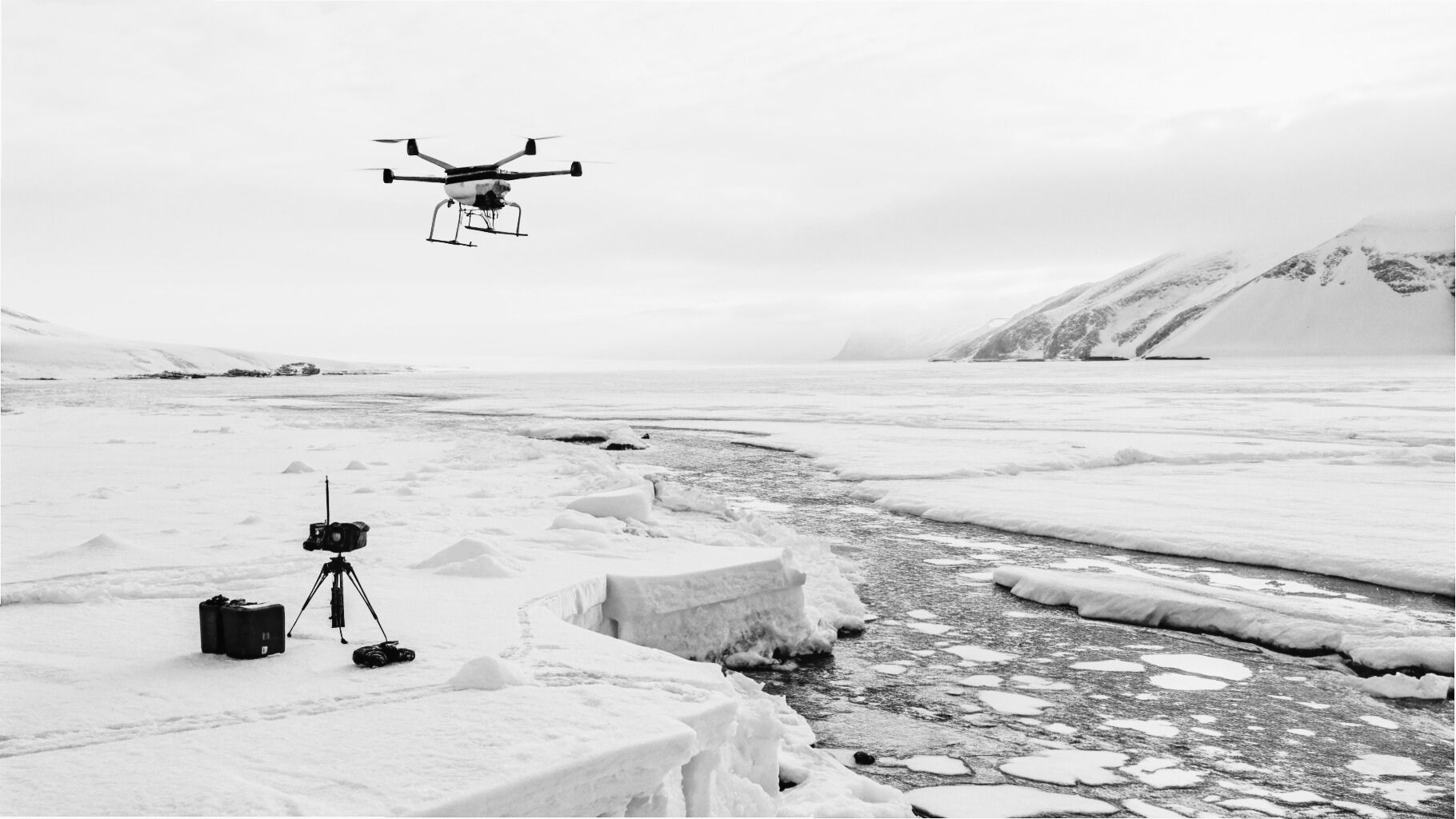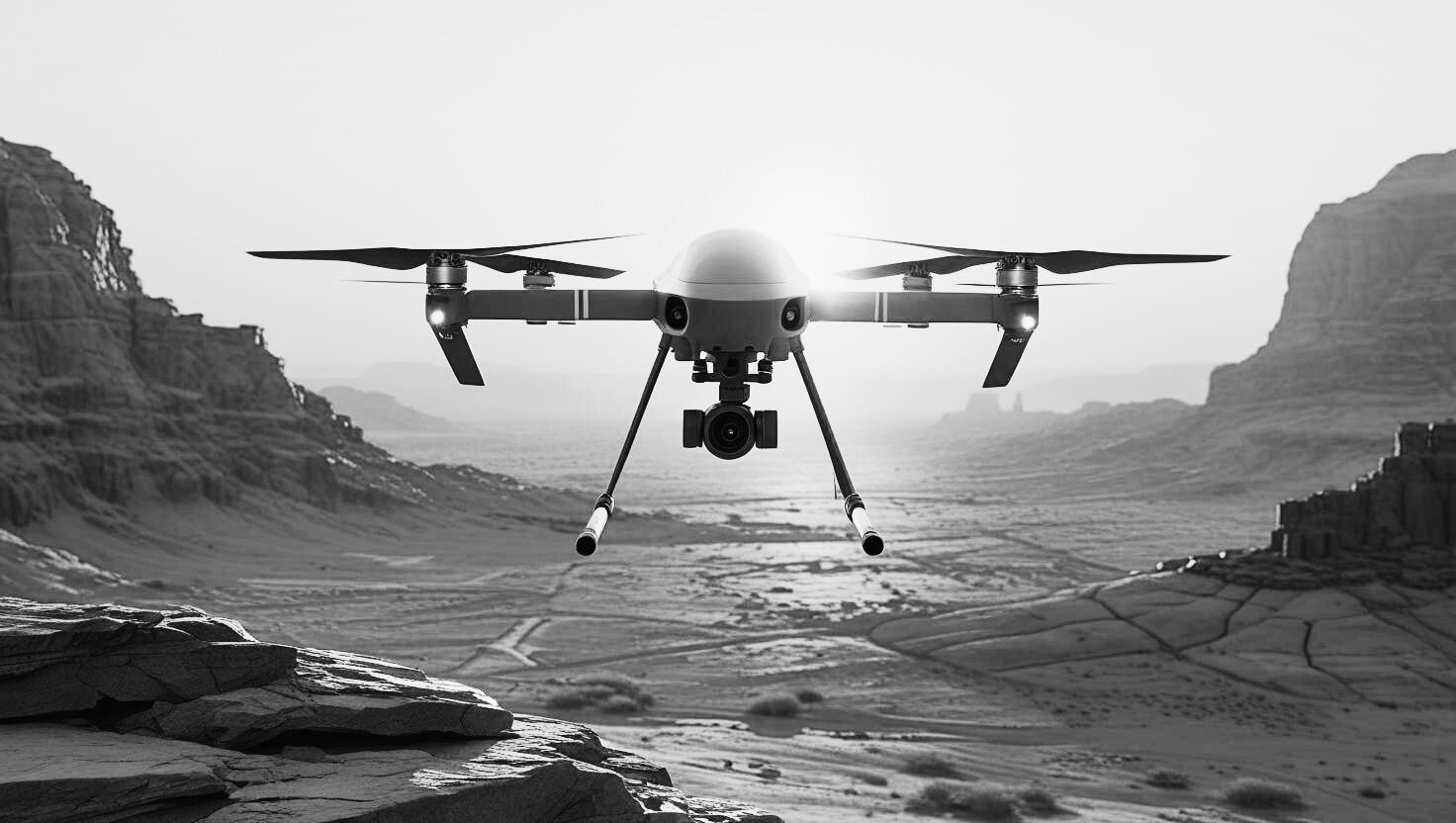
Austria is strengthening its indigenous unmanned aviation capabilities with Schiebel’s latest vertical take-off and landing (VTOL) helicopter drone, engineered for both land-based and maritime operations.
Designated the Camcopter S-301, the unmanned aerial system has a maximum weight of 485 kilograms (1,070 pounds) and is powered by a military-standard engine capable of operating on the same fuel used by NATO aircraft. The platform can carry payloads of up to 110 kilograms (240 pounds), remain airborne for up to 10 hours, and operate at altitudes reaching 5,500 meters (18,000 feet).
The aircraft features a rotor diameter of approximately 4.8 meters (15.7 feet), an airframe length of about 4.7 meters (15.4 feet), and an overall height of roughly 1.8 meters (5.9 feet).
According to Schiebel, the S-301 can be launched from ships or ground vehicles without the need for specialized launch or recovery equipment, allowing deployment in remote or contested environments with minimal logistical support.
Its modular architecture enables rapid reconfiguration between intelligence, surveillance, and reconnaissance (ISR) and strike missions, reducing turnaround time between sorties.
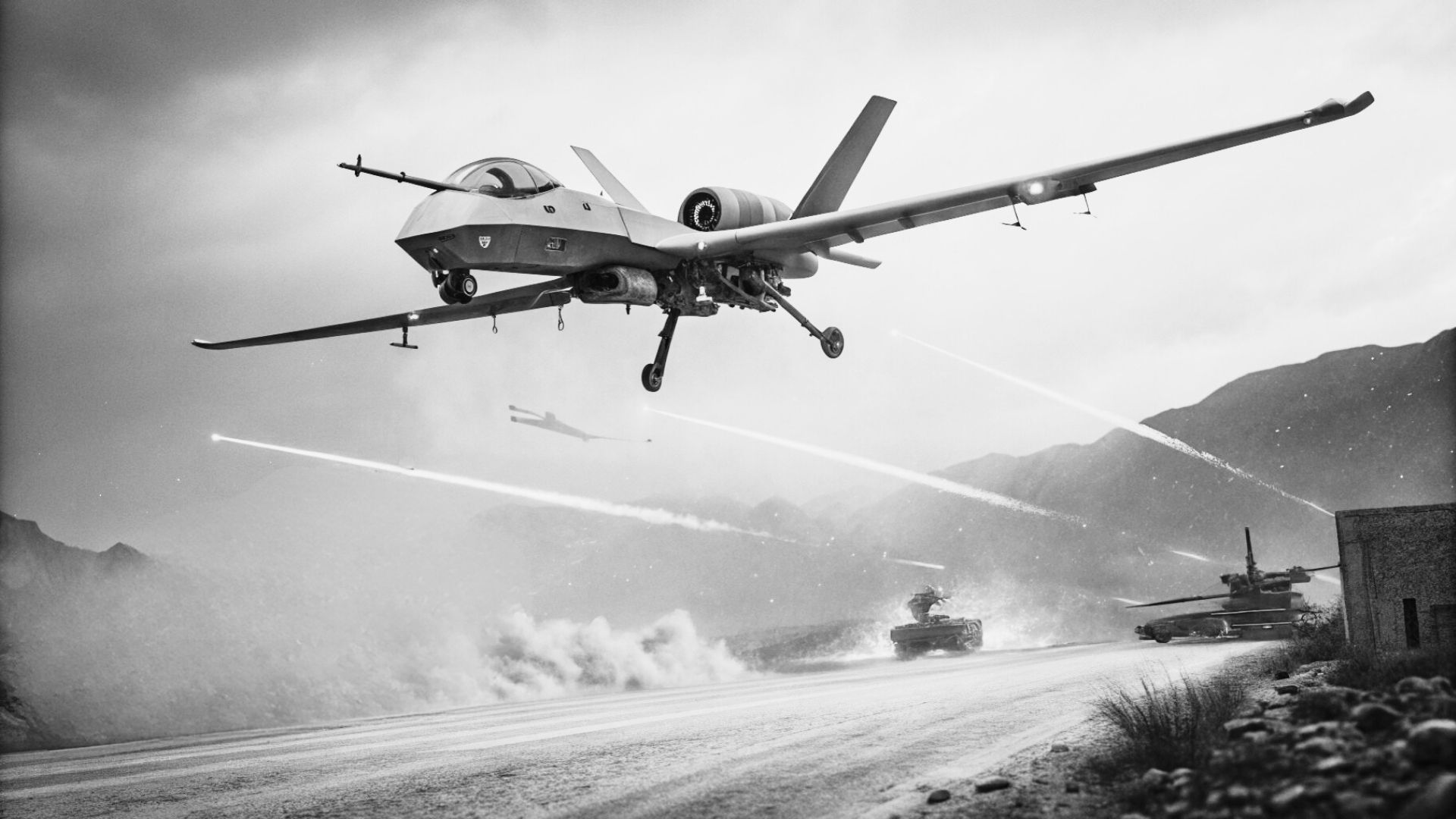
Unveiled at UMEX 2026, the Camcopter S-301 represents the weaponized evolution of Schiebel’s S-300 rotary-wing UAS family. During the exhibition, the drone was displayed armed with two Thales FZ602 rocket pods mounted on reinforced wing stubs, each carrying seven Thales FZ275 laser-guided rockets.
In addition to strike missions, the platform can be equipped with a wide range of payloads, including day-night electro-optical sensors, wide-area and maritime surveillance radars, and electronic warfare systems.
Schiebel stated that the S-301 supports fully autonomous operations, including automatic takeoff and landing, preprogrammed flight routes, in-flight mission updates, and automatic return-to-base functions in emergency scenarios. The system also incorporates multiple navigation solutions and safety features designed to ensure safe recovery in the event of engine anomalies or adverse conditions.