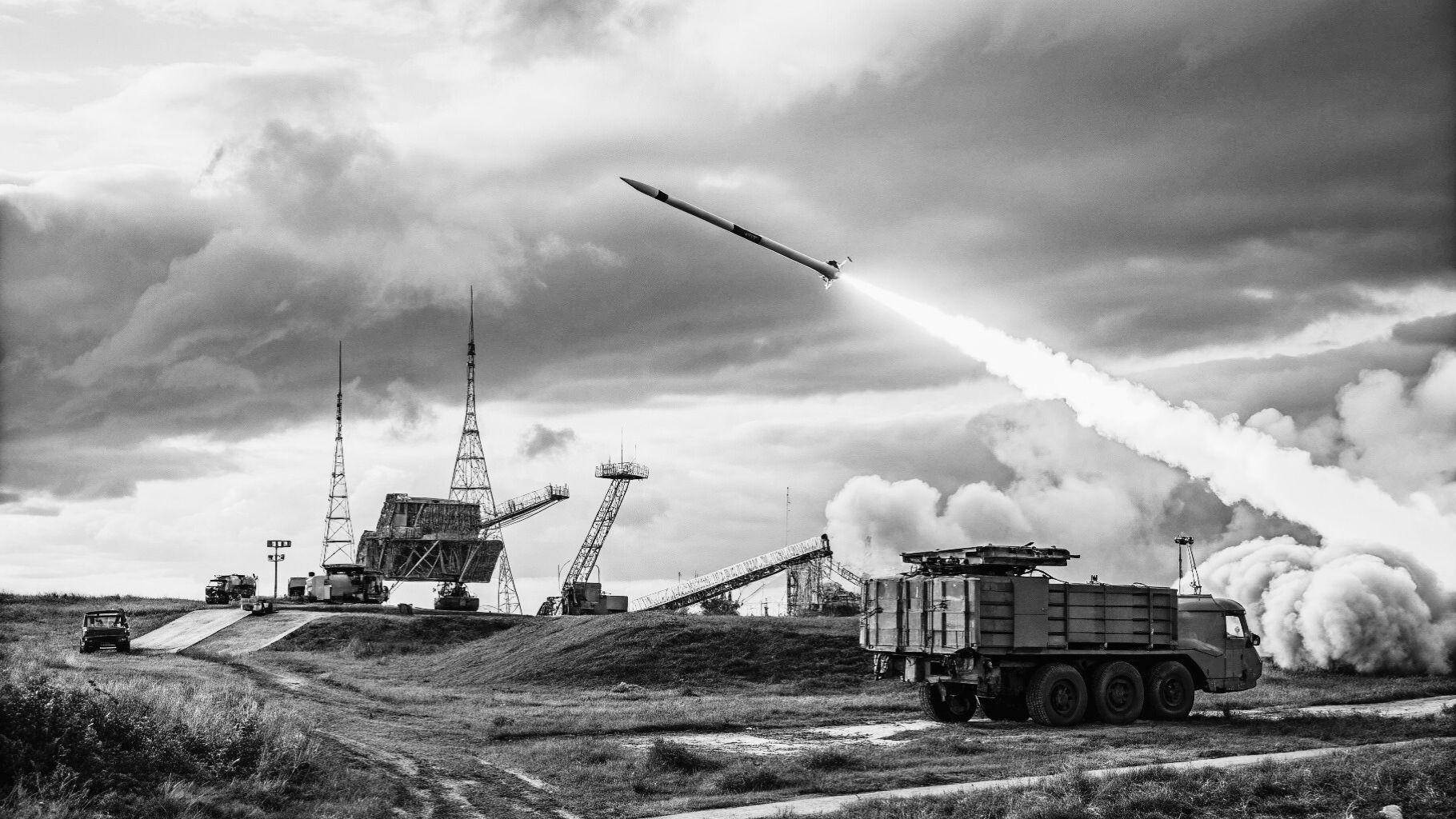
Russia has confirmed the use of its new Oreshnik intermediate-range ballistic missile in a strike on the Ukrainian city of Lviv, marking only the second known operational employment of the system. Defense analysts assess that the launch was intended less to achieve a decisive battlefield effect and more to signal an emerging missile capability aimed at NATO and the United States.
The Russian Ministry of Defense publicly acknowledged the strike a day after the launch, identifying Oreshnik as the weapon used. While damage on the ground appeared limited, U.S. and European officials view the attack as a deliberate demonstration of a system designed to threaten NATO territory, critical infrastructure, and strategic decision-making nodes well beyond the immediate conflict zone.
With an assessed range exceeding 5,500 kilometers and sustained speeds above Mach 10, Oreshnik is believed to be derived from the RS-26 Rubezh program and rapidly fielded to occupy a key role within Russia’s hypersonic missile inventory. From certain launch points, the missile could reach major European capitals such as Paris or Berlin in under 20 minutes and, if deployed from Arctic regions or forward mobile platforms, could theoretically strike targets in the continental United States. Although the Lviv strike employed a conventional payload, the missile’s design reportedly supports multiple warhead configurations, including nuclear-capable MIRVs.
The system’s strategic significance lies not only in its speed, but also in its complexity and penetration capability. Analysts assess that Oreshnik can carry up to six maneuverable reentry vehicles, each potentially deploying multiple submunitions. This architecture is intended to saturate missile defense systems by presenting numerous high-velocity targets simultaneously. Its maneuvering reentry and depressed trajectory further reduce warning times for radar and sensor networks, particularly those defending Central and Western Europe.
Unlike earlier Russian missile systems, Oreshnik appears purpose-built as a deterrent against Western intervention. By fielding a ground-launched missile combining hypersonic performance with nuclear potential, Moscow is deliberately blurring the line between regional warfare and strategic confrontation. Compared with the air-launched Kh-47M2 Kinzhal—which has been intercepted by U.S.-supplied Patriot systems in Ukraine—Oreshnik’s higher-altitude flight profile, greater payload capacity, and ballistic trajectory indicate a shift toward systems intended to overwhelm layered missile defenses.
Despite Kremlin claims that the missile is impossible to intercept, Western defense planners dispute that assertion. U.S. and allied systems such as Aegis SM-3, THAAD, and Israel’s Arrow 3 are theoretically capable of engaging similar high-speed, high-altitude threats. However, effective interception depends on early detection, integrated sensor networks, interceptor availability, and precise target discrimination—factors that become significantly more challenging when confronting a hypersonic, MIRV-capable ballistic missile.