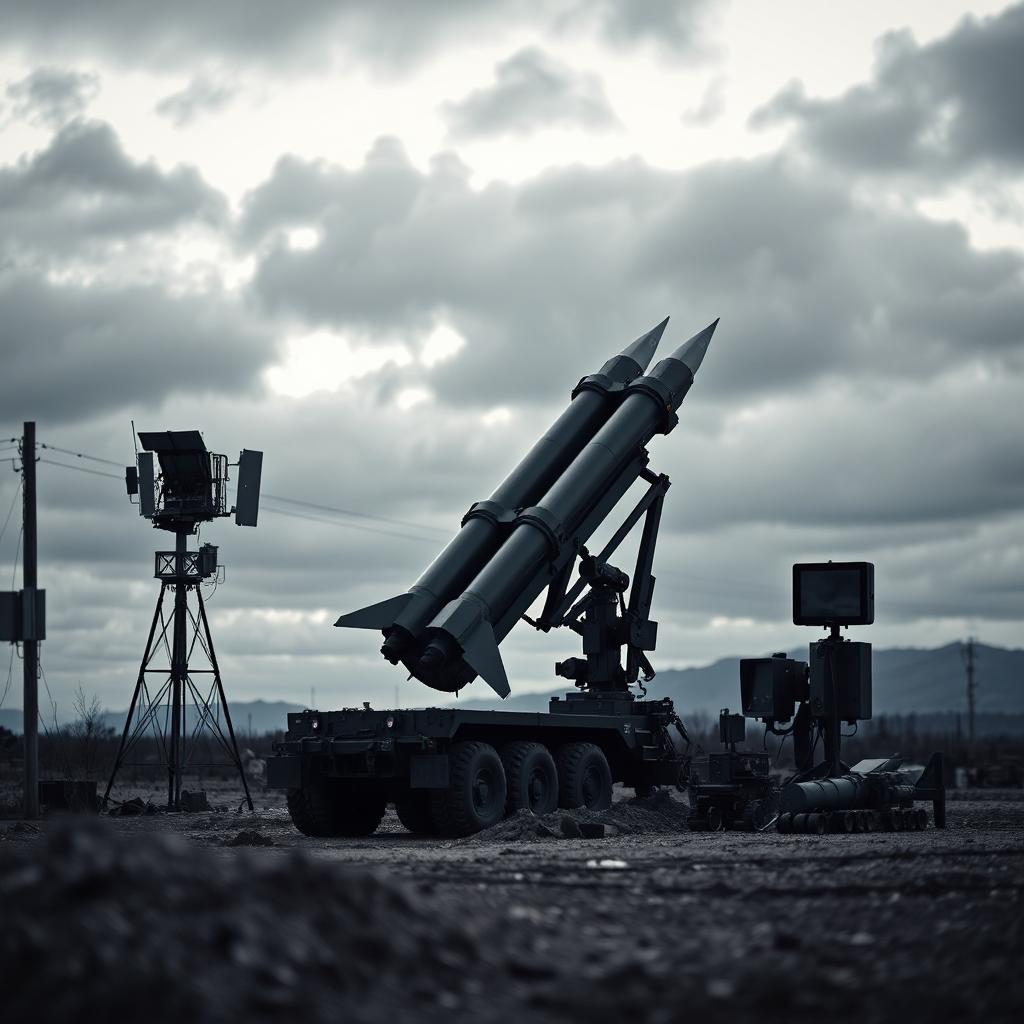
The Defense Innovation Unit (DIU) is calling on industry to deliver commercially developed sensor and seeker technologies to strengthen US defenses against ballistic and hypersonic missile threats.
Through a newly issued solicitation, the DIU is seeking advanced sensing solutions capable of supporting interceptor engagements against intercontinental ballistic missiles and hypersonic glide vehicles. The focus is on high-accuracy detection, tracking, and target discrimination under extreme operational conditions, while meeting strict size, weight, and power (SWaP) constraints for interceptor and space-based platforms.
The initiative prioritizes adapting cutting-edge commercial sensing and data-processing technologies for military use. Proposed systems may integrate LIDAR/LADAR, electro-optical and infrared sensors, radio-frequency technologies, or hybrid architectures combining multiple modalities. The objective is to generate fire-control-quality data precise and rapid enough to guide kinetic interceptors during boost, midcourse, or glide phases.
Solutions must enable real-time, low-latency tracking with high update rates and withstand harsh environments including radiation, vibration, and thermal stress. Modular designs are encouraged, allowing deployment either as primary seekers on kinetic kill vehicles or as hosted payloads aboard low Earth orbit satellites with an operational lifespan of up to five years.
Project Timeline
The DIU has outlined an accelerated development roadmap. Selected vendors must demonstrate key capabilities in laboratory conditions within six to nine months of contract award, followed by an on-orbit demonstration within 12 to 24 months.
Cost-effectiveness and scalability are central to the program. The DIU seeks solutions that can be produced at commercial volumes exceeding 100 units annually and at significantly lower costs than traditional defense sensors.
The effort will proceed under the DIU’s Commercial Solutions Opening framework using prototype Other Transaction agreements. Successful prototypes may transition directly into production contracts without further competition, potentially broadening adoption across multiple Department of Defense stakeholders. The opportunity is open to US and international firms.
Broader Missile Defense Modernization
This solicitation builds on recent US missile defense sensor upgrades. In 2023, the Missile Defense Agency awarded Raytheon a contract to develop enhanced electro-optical and infrared seekers for the Next Generation Interceptor, improving midcourse discrimination between warheads and decoys.
Meanwhile, Northrop Grumman advanced space-based infrared tracking technologies under the Hypersonic and Ballistic Tracking Space Sensor program, supporting the Space Development Agency’s push for a proliferated missile-tracking constellation.
In 2025, RTX secured an $80 million contract to continue developing advanced seeker processor hardware for the Maritime Strike Tomahawk program, aimed at enhancing precision targeting and operational reliability.
Together, these efforts underscore a broader US strategy to modernize missile defense sensing against increasingly complex hypersonic and ballistic threats.