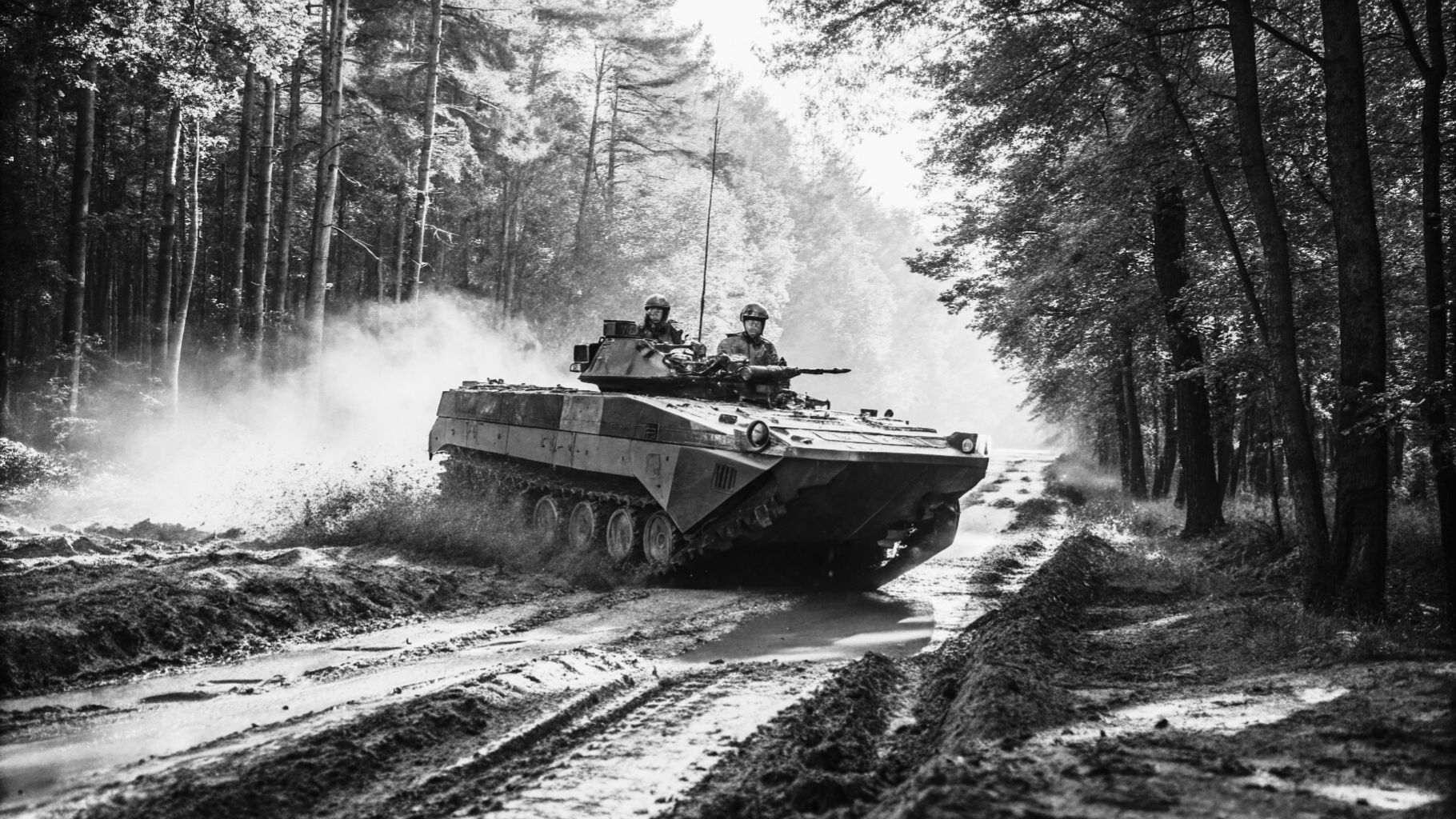
The first Combat Vehicle 90 (CV90) MkIV infantry fighting vehicles configured for the Slovak Armed Forces have begun testing at BAE Systems Hägglunds’ facilities in Sweden. This development marks a significant programme milestone, signalling the transition from contractual execution to the validation of Slovakia’s national vehicle configuration—an essential phase ahead of delivery.
Slovakia’s CV90 MkIV procurement has now entered a decisive stage, with the initial Slovak-specific vehicles undergoing trials at BAE Systems Hägglunds’ production site in Örnsköldsvik. As reported by Slovak defence outlet FutureArmy.sk, the manufacturer has confirmed that the vehicles have completed assembly and are now engaged in an intensive test programme focused on verifying Slovakia’s command, control and communications systems prior to operational service.
The CV90 acquisition forms part of Slovakia’s wider effort to retire legacy Soviet-era tracked platforms in favour of NATO-standard armoured systems capable of seamless integration into multinational operations. The programme was formalised in December 2022 through a government-to-government agreement between Sweden and Slovakia, resulting in a €1.3 billion contract for 152 CV90 MkIV vehicles in the CV9035 configuration. Beyond infantry fighting vehicles, the contract encompasses multiple mission variants intended to deliver a fully modernised mechanised fleet, while harmonising training, logistics and sustainment around a single platform.
Domestic industrial participation plays a major role in the programme’s structure. More than 30 Slovak companies are involved, representing over 40 percent of the total contract value. This approach strengthens national defence-industrial capacity, establishes in-country maintenance and support infrastructure, and reduces long-term reliance on foreign suppliers. It also positions Slovak industry to remain engaged throughout the vehicle’s lifecycle, particularly as the MkIV design supports incremental upgrades rather than fixed mid-life modernisation cycles.
Although testing is currently taking place in Sweden, the delivery schedule anticipates the first vehicles entering service in Slovakia during 2026. The programme reached an important production milestone in the second half of 2025, when the first Slovak CV90s rolled off the assembly line, with the present trials representing a continuation of that output. This timeline broadly mirrors that of neighbouring MkIV customers, including the Czech Republic, which unveiled its first CV90 MkIV in 2025 and expects domestic deliveries in 2026. For Slovakia, the schedule aligns with heightened security demands along NATO’s eastern flank and ongoing efforts to bolster national readiness.
Slovakia has selected the CV9035 MkIV variant, equipped with a 35 mm Bushmaster III automatic cannon, an advanced fire-control system, and a digital vehicle architecture designed to support future sensor and weapon integration. The Slovak vehicles are also planned to incorporate the Iron Fist active protection system, reflecting a growing European focus on countering modern anti-tank threats and loitering munitions. Compared with earlier CV90 generations, the MkIV standard offers enhanced ballistic and mine protection alongside a modular electronic backbone that enables rapid capability upgrades without major redesign.