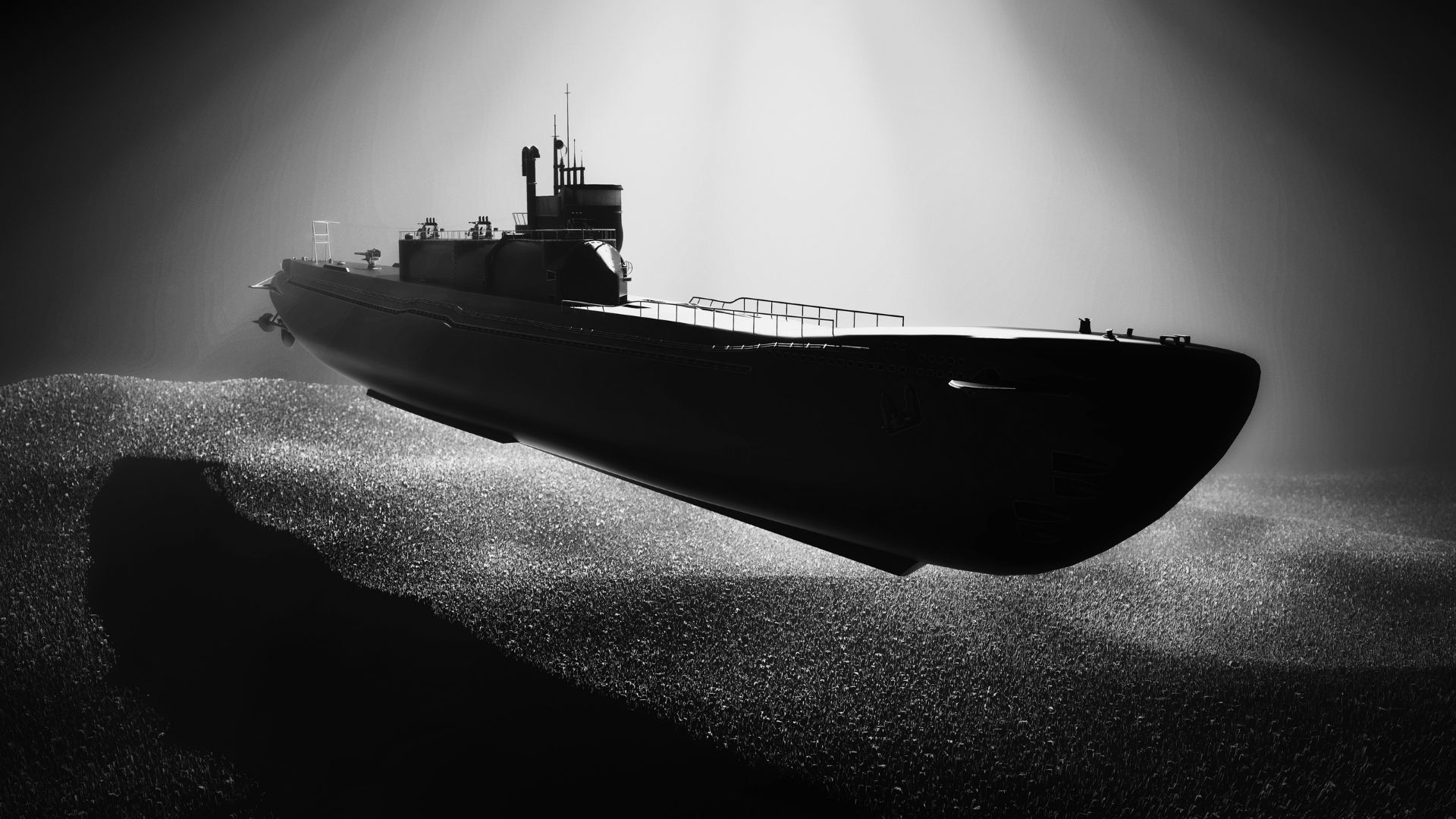
Hidden beneath the ocean’s surface and far from public view, America’s next-generation nuclear deterrent is steadily taking form. The Columbia-class submarine is a heavily fortified platform designed to replace the Ohio-class fleet and sustain the US nuclear triad well into the mid-21st century.
Engineered for extreme stealth and endurance, the submarine integrates advanced propulsion, sonar, and missile technologies, enabling it to patrol vast ocean areas undetected for months at a time. Built to survive and retaliate if challenged, the Columbia-class is set to become the backbone of America’s strategic undersea deterrence.
A Strategic Deterrence Platform
The US Navy operates three categories of submarines: nuclear-powered attack submarines (SSNs), nuclear-powered cruise missile submarines (SSGNs), and nuclear-powered ballistic missile submarines (SSBNs). While SSNs and SSGNs perform a variety of missions, SSBNs are singularly dedicated to nuclear deterrence.
Designated the Navy’s highest-priority acquisition, the Columbia-class program will deliver 12 new SSBNs to replace the aging Ohio-class boats, which are expected to retire during the 2030s.
Program Scale and Challenges
The Columbia-class represents one of the most ambitious naval procurement efforts in US history. Total procurement costs are estimated at $126.4 billion, with overall acquisition costs reaching approximately $139.7 billion.
Construction of the lead vessel, USS Columbia (SSBN-826), began in 2021, with delivery planned for the early 2030s. Follow-on submarines will be produced on a roughly two-year cycle to preserve uninterrupted at-sea deterrence as Ohio-class submarines leave service.
Despite its strategic importance, the program faces considerable technical and budgetary challenges, including complex welding processes, integration of advanced stealth technologies, and strict cost controls within a constrained defense budget.
Design and Capabilities
The Columbia-class emphasizes stealth, survivability, and assured strike capability. Noise reduction is achieved through optimized hull shaping, acoustic coatings, machinery isolation, and sound-dampening mounts, while advanced propulsors further reduce acoustic signatures.
An electric-drive propulsion system allows the submarine to operate quietly and efficiently, blending into ambient ocean noise rather than relying on speed. A key innovation is its life-of-ship nuclear reactor, eliminating the need for mid-life refueling and improving operational availability across a projected 42-year service life.
The submarine also incorporates secure, low-probability-of-intercept communications, including extremely low-frequency signals, enabling it to receive authenticated launch orders even in contested or degraded environments.
Armed with Trident II D5 ballistic missiles, the Columbia-class is designed for assured second-strike capability. Its launch system prioritizes reliability under extreme conditions, reinforcing its role as a deterrent rather than a first-use weapon.
Looking Ahead
With its combination of stealth, advanced propulsion, and modular construction, the Columbia-class is expected to define US strategic undersea capabilities for decades. Defense analysts emphasize that its continuous at-sea deterrence role remains central to US nuclear strategy, signaling to adversaries that a credible retaliatory capability will endure under all circumstances.