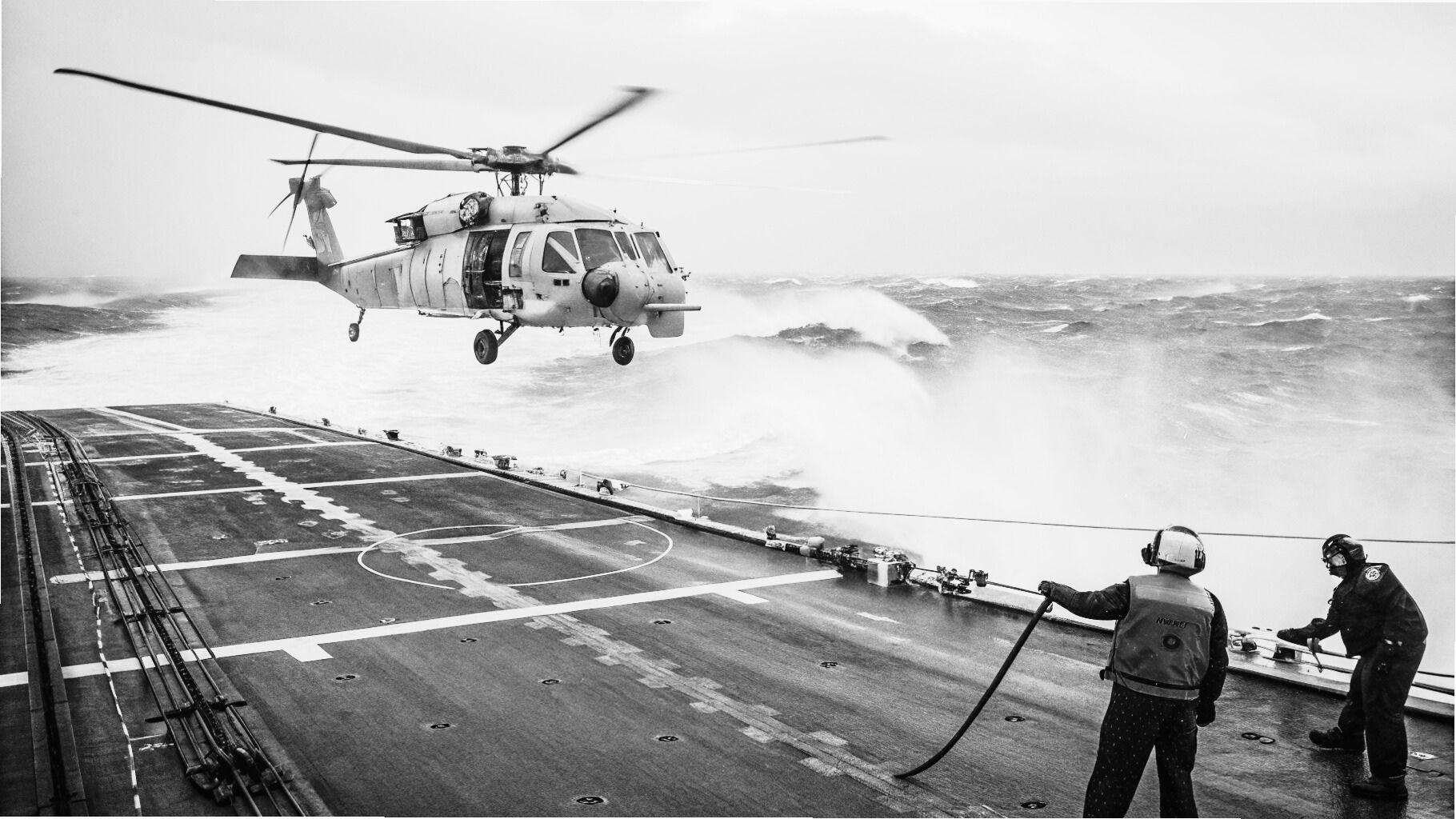
When jets roar off an aircraft carrier and disappear into the distance, they are never truly alone. High above, the E-2D Hawkeye is already in position—scanning the skies, tracking threats, and coordinating the battle. More than just an aircraft, it serves as an airborne command hub, transforming dispersed forces into a unified, combat-ready network.
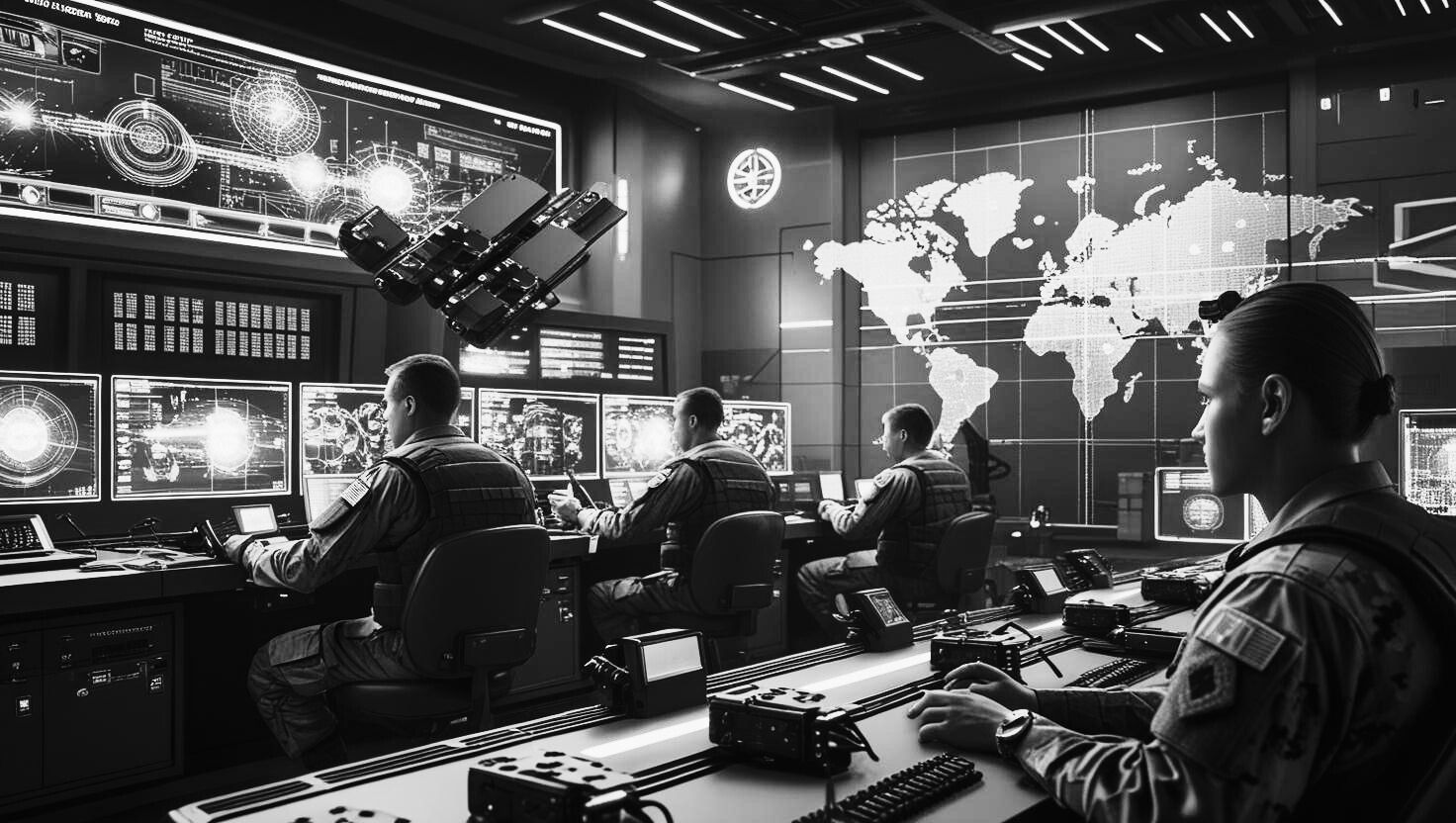
The E-2D Advanced Hawkeye is a carrier-based early warning and command-and-control platform designed to extend a fleet’s awareness far beyond the horizon. Developed by Northrop Grumman, it builds on the legacy of the E-2C with advanced radar, avionics, and communications systems. Acting as the fleet’s “eyes in the sky,” it detects aircraft, missiles, and surface threats while directing operations in real time.
The Hawkeye program traces back to the 1960s, when the US Navy sought an aircraft capable of long-range surveillance and battle coordination. Early variants like the E-2A introduced airborne early warning but faced reliability issues. The E-2B improved processing power, while the E-2C brought major advances in radar and battle management, cementing its role as a flying command center. The modern E-2D represents a major leap forward, featuring the AN/APY-9 AESA radar, a digital cockpit, and enhanced data links for network-centric warfare.
Key strengths of the platform include long-range detection, multi-domain communication, and the ability to track hundreds of targets simultaneously in all weather conditions. It acts as a force multiplier, linking ships, aircraft, and command centers into a cohesive operational picture. However, its relatively low speed and maneuverability mean it depends on escort aircraft in high-threat environments, and its advanced systems contribute to high acquisition and operating costs.
Deployed with US Navy carrier strike groups, the Hawkeye plays a central role in global operations. It has supported missions such as Operation Inherent Resolve and participates in major exercises like Malabar Exercise, enhancing interoperability among allied forces. Beyond combat, it has contributed to disaster response and maritime security missions.
Looking ahead, the E-2D is expected to remain a cornerstone of naval aviation. Future upgrades may include integration with unmanned systems, AI-assisted tracking, and improved connectivity with space-based assets, ensuring its continued relevance in increasingly complex and contested environments.