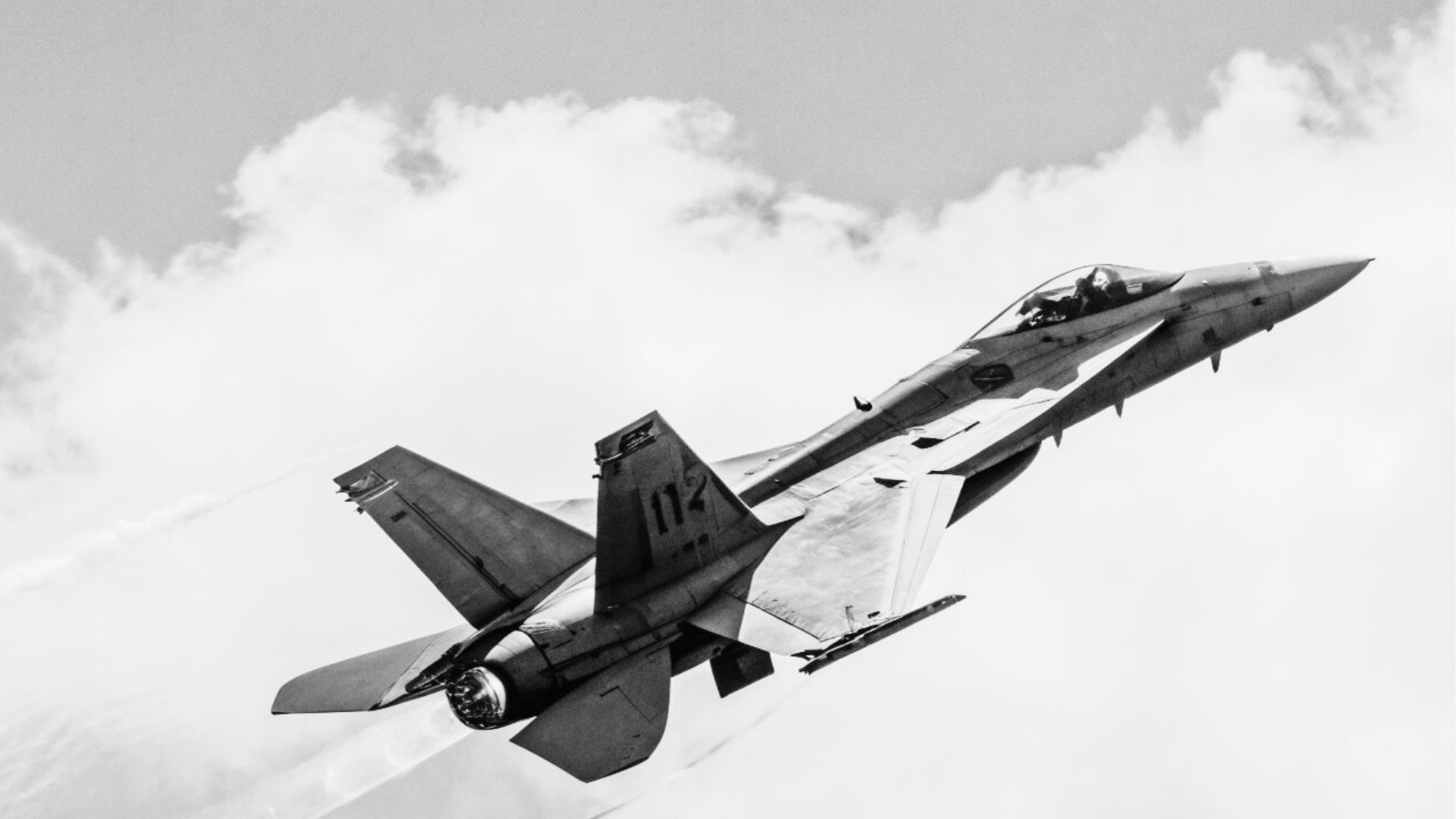
The upcoming HAL Tejas Mk2, designated as a Medium Weight Fighter (MWF), represents a major step forward rather than a modest upgrade of the Tejas platform. The aircraft reflects a broader redesign focused on improved endurance, enhanced capability, and long-term operational sustainability.
While the fighter’s first flight is currently scheduled for mid-2026 and its certified airframe life has not yet been formally confirmed, most modern 4.5-generation fighters are designed with service lives of roughly 6,000 to 8,000 flight hours. Sources close to the development program suggest that the Tejas Mk2 has been built with similar durability targets.
One of the most visible changes is the aircraft’s stretched fuselage, which extends to about 14.6 meters compared with the roughly 13.2–13.9 meters of the HAL Tejas Mk1A. This longer airframe allows space for increased internal fuel, advanced avionics systems, and greater payload capacity while preserving aerodynamic balance. The addition of close-coupled canards improves flight control, enhances performance at high angles of attack, and reduces drag during complex maneuvers. These aerodynamic features are fully integrated into the aircraft’s architecture and are supported by advanced composite construction methods that enhance strength while minimizing additional weight.
Program insiders indicate that the Mk2’s structure makes greater use of refined composite manufacturing techniques than earlier versions of the Tejas. These composites are engineered to improve fatigue resistance and structural durability. Compared to traditional materials, modern composites distribute loads more efficiently, resist corrosion, and maintain structural integrity through long operational cycles.
As the prototype stage approaches, the Tejas Mk2 is emerging as a crucial transition platform for the Indian Air Force. The fighter is expected to address the medium-weight capability gap that will appear as legacy aircraft such as the Dassault Mirage 2000 and the SEPECAT Jaguar gradually leave service.
With its extended design, canard-driven maneuverability, and robust composite airframe, the Tejas Mk2 is being developed as a fighter capable of longer service life, stronger combat performance, and continuous evolution alongside India’s future air power requirements. ✈️