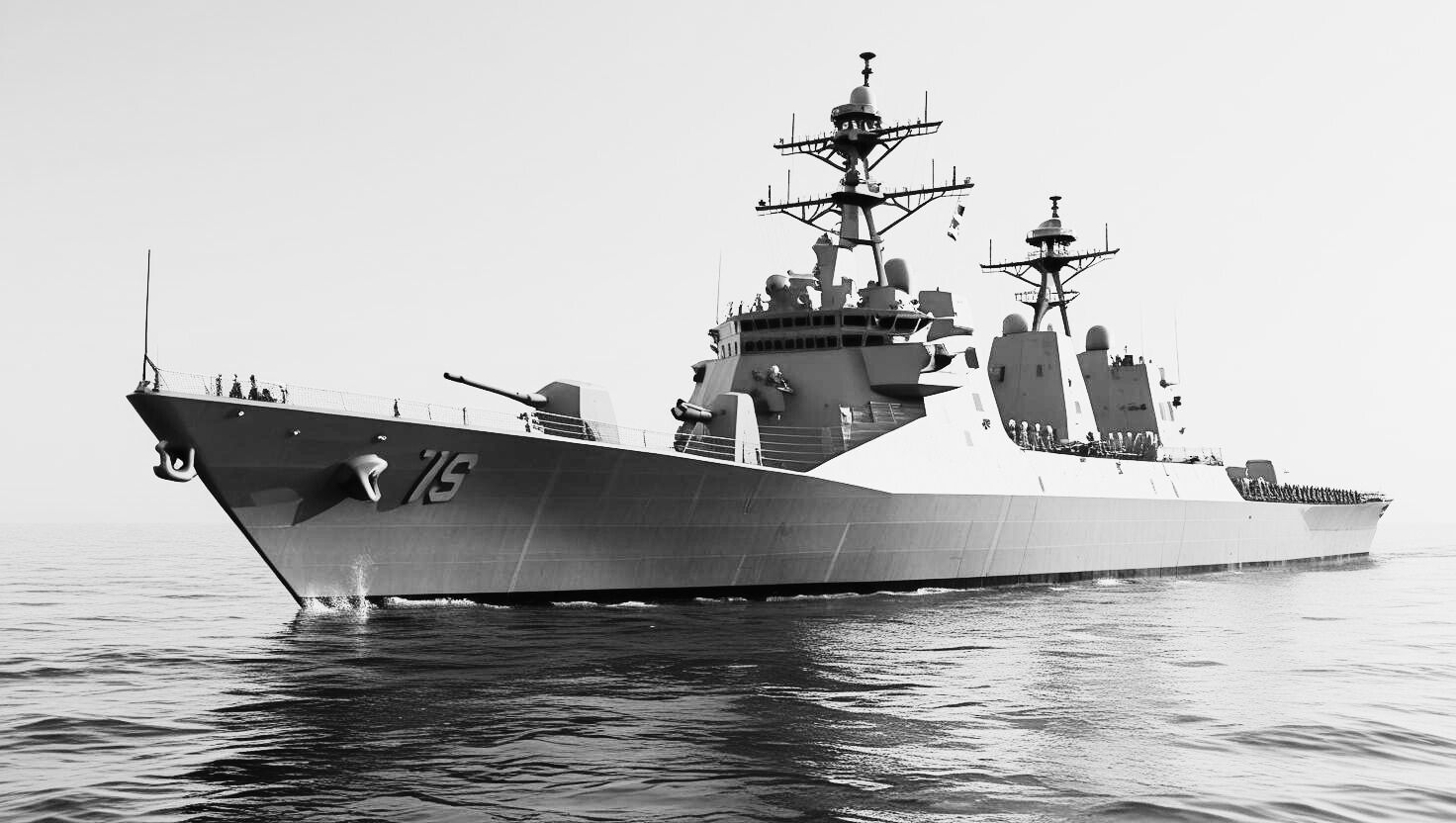

India is preparing to export its indigenously developed Next Generation Missile Vessels (NGMV) to smaller friendly nations, positioning them as compact yet highly capable platforms offering strong maritime strike power at a competitive cost. The 1,450-ton class warship is designed to deliver substantial firepower despite its relatively small size, making it an attractive option for navies seeking efficient force multipliers.
The vessel’s offensive strength is anchored by eight BrahMos supersonic cruise missiles, enabling both anti-ship and land-attack missions. This is complemented by a layered air defence system featuring 24 VL-SRSAM interceptors, capable of engaging aircraft, helicopters, and incoming anti-ship missiles. Together, these systems provide a balanced mix of offensive punch and defensive resilience.
Designed with stealth in mind, the NGMV incorporates a low-observable hull that reduces radar, infrared, and acoustic signatures, enhancing survivability in contested and littoral environments. The program, led by Cochin Shipyard Limited (CSL), involves the construction of six vessels under a contract worth approximately ₹9,804 crore. Following the steel-cutting ceremony in December 2024, the first ship is expected to be delivered by March 2027, with subsequent units arriving in phases.
Operationally, the NGMV is built for speed and agility, capable of reaching up to 33 knots and manned by a crew of around 80 personnel. It will feature advanced sensors, including air surveillance radars, fire control systems, and integrated missile defence capabilities. Primarily intended for offensive maritime strike roles, the vessel will also support sea denial operations, local naval defence, and protection of offshore assets. Additional features include modern propulsion systems, integrated platform management, advanced power distribution, and enhanced damage control systems to improve combat survivability.