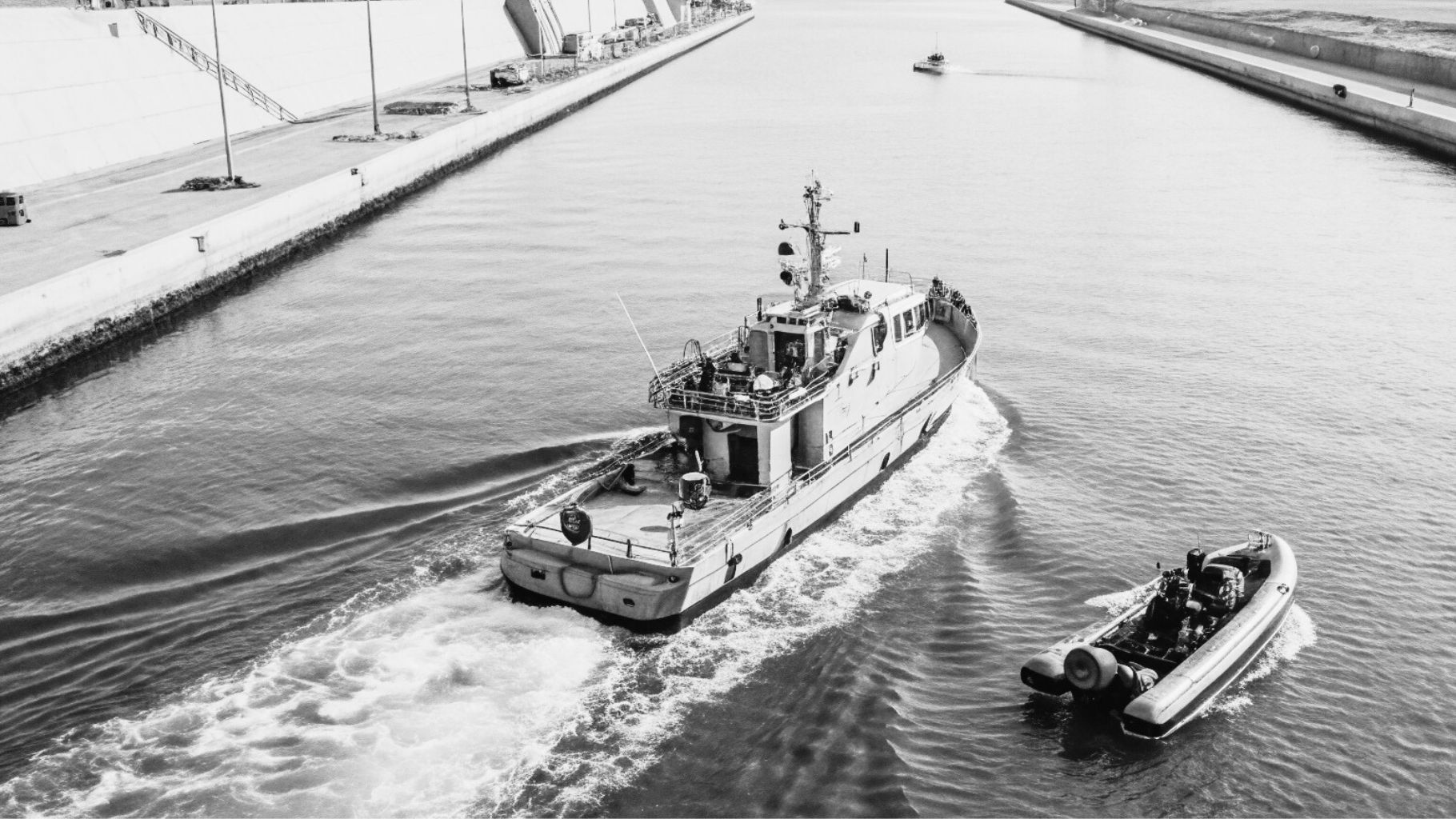
The Spanish Navy has taken delivery of its first unmanned surface vessel (USV), signaling the start of manned–unmanned teaming within the fleet.
The Sead 23 USV has been assigned to the CEVENTA unit at the naval base in Rota, in southern Spain. Purpose-built as an unmanned maritime platform, the vessel is designed to support a wide range of missions, including patrol and escort duties, target detection and tracking, coastal surveillance, seabed mapping, and reconnaissance operations.
Spanish firm Seadrone, a subsidiary of the Zelenza Group, was awarded the contract in November 2024 to deliver the 7-meter platform at a cost of €1.1 million ($1.29 million).
The Sead 23 measures 2.32 meters in beam, draws 57 centimeters of draft, and offers a payload capacity of up to 600 kilograms, accommodating fuel along with a variety of sensors and mission systems. Its modular architecture allows for the integration of satellite communications, advanced sensor suites, and additional payloads such as remote weapon stations or loitering munitions.
Built from fiberglass, the USV is powered by a 320-horsepower diesel engine coupled to a waterjet propulsion system, enabling speeds of up to 36 knots. At an economical cruising speed of 4 knots, the vessel can remain at sea for as long as one week.
The platform enhances operational flexibility by undertaking high-risk missions that reduce personnel exposure while enabling manned–unmanned cooperation. It supports amphibious operations through rapid landing-zone and bathymetric surveys and contributes to mine countermeasures by deploying sonar or underwater vehicles at stand-off distances.
The Sead 23 has already been showcased in multiple national and international exercises, including OCEAN 2020, REP(MUS), DÉDALO 23, and BALTOPS 24, with operator training currently underway ahead of a testing campaign planned for 2026.