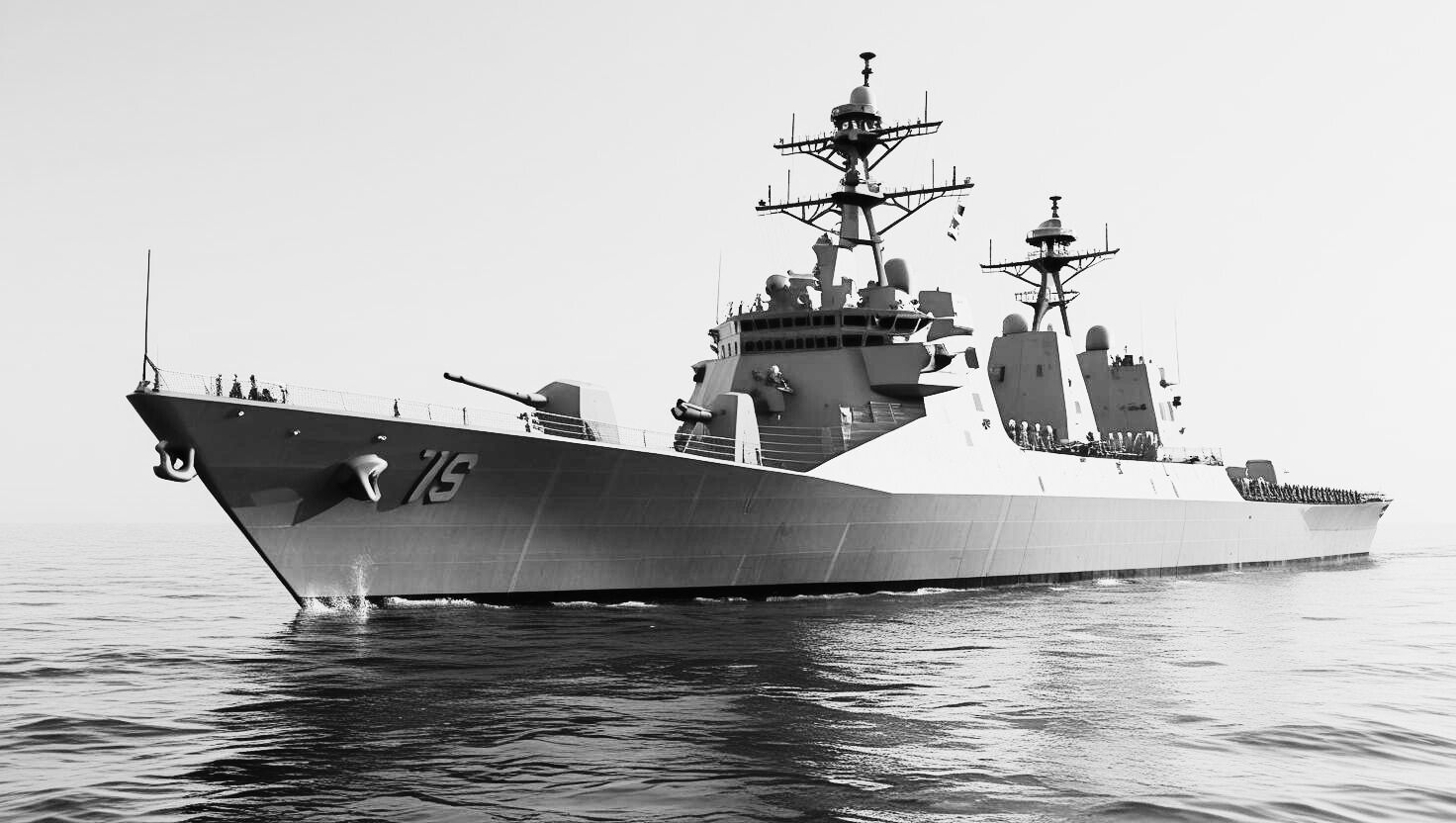
U.S. shipbuilder Ingalls Shipbuilding has officially delivered the guided missile destroyer Ted Stevens (DDG 128) to the U.S. Navy, marking another major step forward in the service’s Flight III Arleigh Burke-class modernization program. The delivery took place in Pascagoula, Mississippi, and reflects sustained progress in expanding advanced surface combatant production.
The handover of DDG 128 reinforces the Navy’s broader push to upgrade fleet capabilities in response to evolving maritime threats and the demands of Distributed Maritime Operations. Navy officials have highlighted Flight III destroyers as critical nodes in future naval battle networks, capable of supporting both regional and theater-wide defense missions.
The Arleigh Burke-class destroyer program remains the backbone of the Navy’s surface fleet and is the longest continuously produced destroyer class in U.S. history. These multi-mission warships are optimized for anti-air, anti-submarine, anti-surface, and ballistic missile defense missions. Flight III ships introduce substantial improvements in power, cooling, and combat system integration, enabling the deployment of next-generation sensors and weapons.
Ted Stevens is equipped with the AN/SPY-6(V)1 Air and Missile Defense Radar, a GaN-based AESA system that delivers a significant leap in detection range, sensitivity, and electronic warfare resilience. Compared to earlier SPY-1 variants, SPY-6 can simultaneously track a far broader set of threats, including ballistic missiles, cruise missiles, aircraft, and surface targets.
Paired with the Aegis Baseline 10 Combat System, the destroyer gains expanded engagement options, including integration with SM-6 interceptors and advanced electronic warfare capabilities. This configuration enables Flight III destroyers to function as high-end air and missile defense assets, extending their role well beyond traditional escort duties and reinforcing U.S. naval dominance in contested maritime domains.