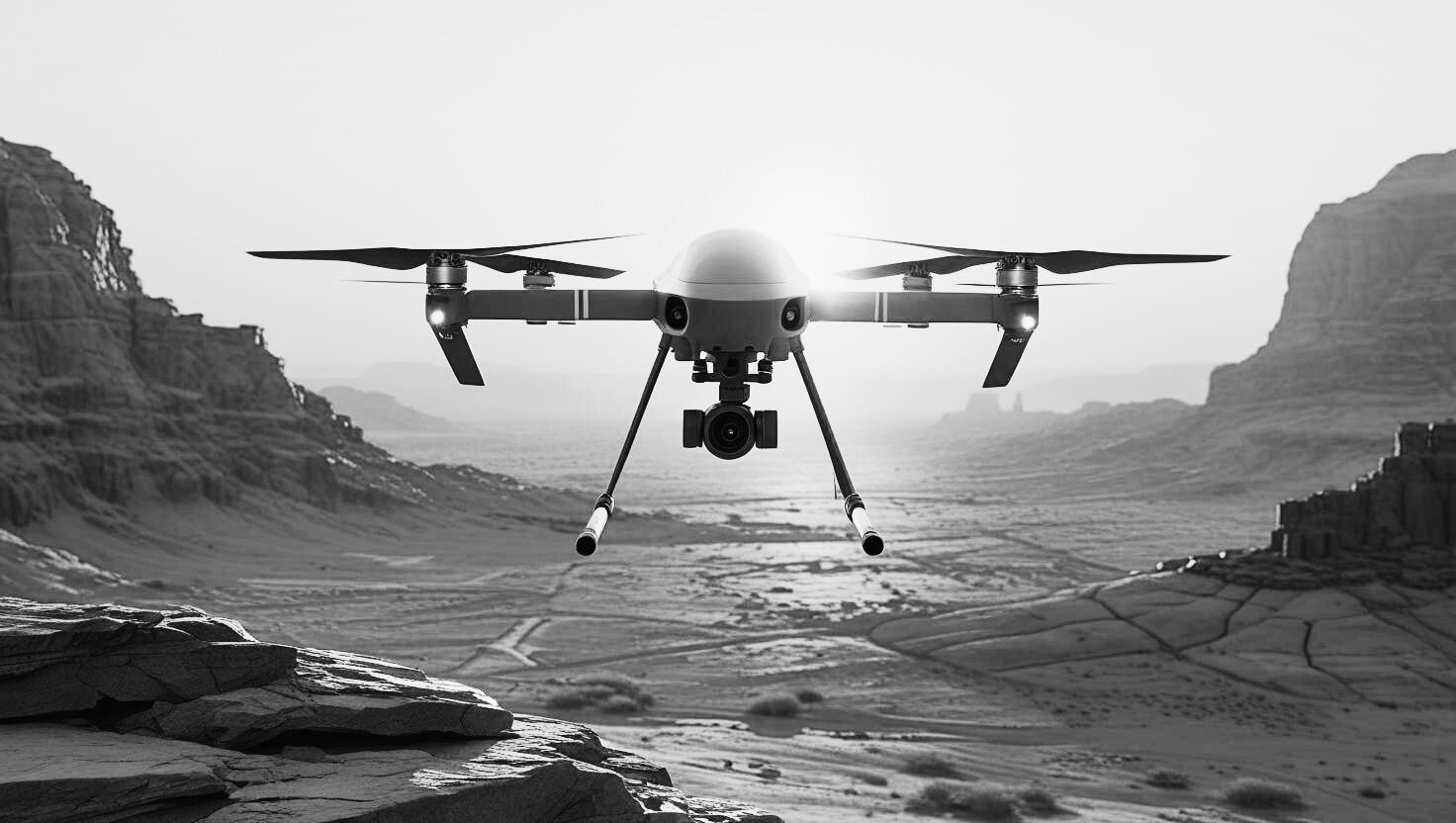
The US Department of the Navy has selected L3Harris Technologies’ Red Wolf launched-effect vehicle for the US Marine Corps’ Precision Attack Strike Munition programme, a move intended to significantly extend the reach and survivability of its rotary-wing aviation assets.
The selection follows an extensive evaluation campaign involving 52 flight tests, including recent low-altitude launch trials conducted from an AH-1Z Viper attack helicopter.
The award was made under an Other Transaction Agreement, a contracting approach used by the US government to accelerate research, development, and prototyping efforts.
Under the terms of the agreement, L3Harris will deliver all Red Wolf units along with technical manuals, training packages, support equipment, and test hardware for the AH-1Z fleet by the end of fiscal year 2027.
Designed for long-range operations, the Red Wolf offers a range in excess of 200 nautical miles (around 230 miles or 370 kilometres) and an endurance exceeding 60 minutes, far surpassing the reach of current rotary-wing weapons such as the AGM-114R-4 Hellfire and the Joint Air-to-Ground Missile–Medium Range (JAGM).
By comparison, the Hellfire has an effective range of approximately 21 miles (34 kilometres), while the JAGM is limited to about 10 miles (16 kilometres).
Beyond its precision-strike role, the Red Wolf supports a range of non-kinetic missions, including communications relay, signal intelligence, electronic attack, and decoy operations. L3Harris notes that these capabilities significantly broaden the number of aircraft able to engage targets at extended ranges.
With an estimated unit cost of roughly $300,000 and a production capacity scalable to about 1,000 systems annually, the Red Wolf is positioned as a cost-effective supplement to scarce and expensive long-range strike weapons in a high-end conflict.
The munition can carry payloads of up to 25 pounds (11.4 kilograms) and may be used to degrade or disrupt enemy sensor systems ahead of follow-on strikes by larger weapons such as the Long-Range Anti-Ship Missile and the Joint Strike Missile.