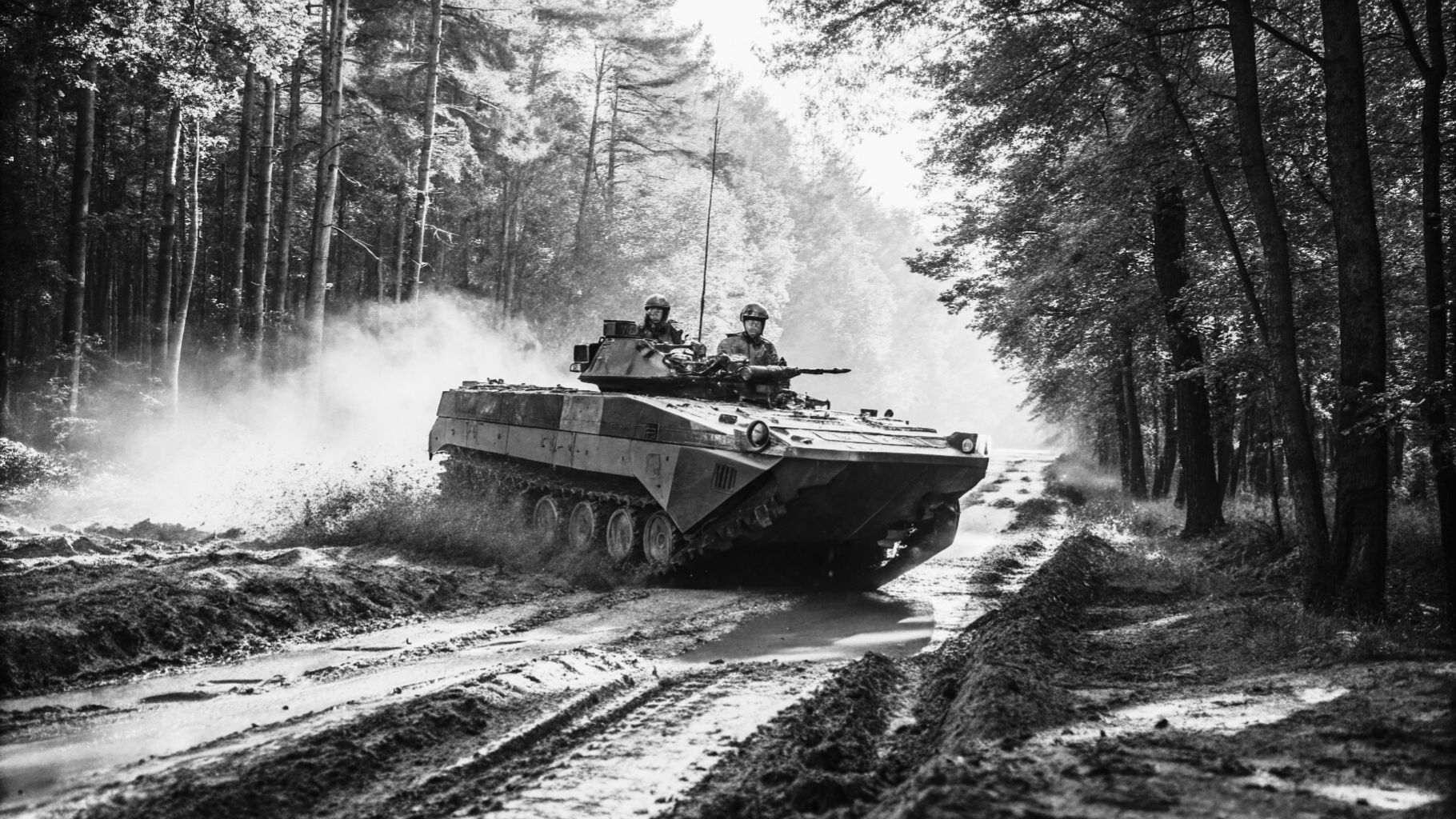
After more than a decade of development, South Korea has unveiled a prototype of its next-generation Korea Amphibious Assault Vehicle, known as KAAV II.
Developed by Hanwha Aerospace, the new amphibious platform is designed to deliver improved mobility, stability, and survivability, enabling South Korean forces to transition more effectively between maritime and land operations.
KAAV II can reportedly achieve water speeds of up to 20 kilometers per hour (12.4 mph), although its maximum land speed has not yet been disclosed. The vehicle also features an expanded troop compartment and upgraded protection systems aimed at improving crew survivability against modern battlefield threats.
The programme was first conceptualized in 2015 to replace South Korea’s aging KAAV-7A1 amphibious assault vehicles, which are based on designs originating from the 1970s. While more than 170 KAAV-7A1 platforms remain in service, they have increasingly fallen behind newer armored combat systems in capability and survivability.
Enhanced Firepower and Combat Systems
The KAAV II is armed with a 40mm automatic cannon capable of engaging drones, armored vehicles, and fortified enemy positions. The weapon uses cased telescoped ammunition, in which the projectile is fully enclosed inside the cartridge, allowing improved ammunition storage efficiency and higher onboard ammunition density.
The cannon reportedly has an effective range of up to 4 kilometers (2.5 miles) and offers greater armor penetration compared to conventional medium-caliber systems.
With a firing rate of up to 200 rounds per minute, the system provides flexibility against a wide range of threats, including infantry, light armored vehicles, helicopters, and drones, without requiring a change in weapon configuration.
Reports indicate the vehicle is powered by an 850-horsepower engine for land operations, while maritime propulsion output can reportedly reach as high as 2,700 horsepower during amphibious missions.
KAAV II is also equipped with upgraded command-and-control architecture and advanced sensor systems intended to improve battlefield awareness and operational effectiveness in contested combat environments.