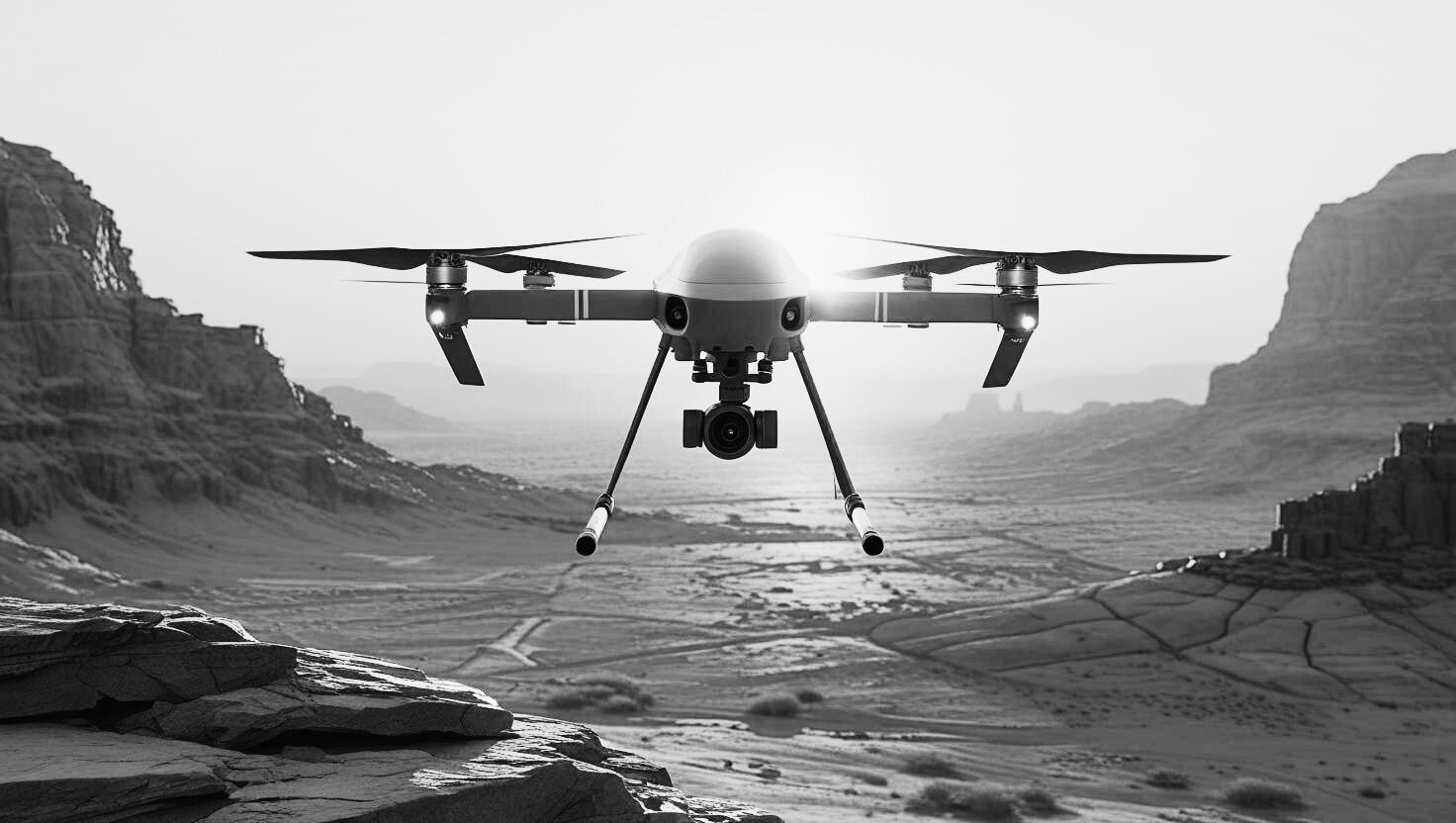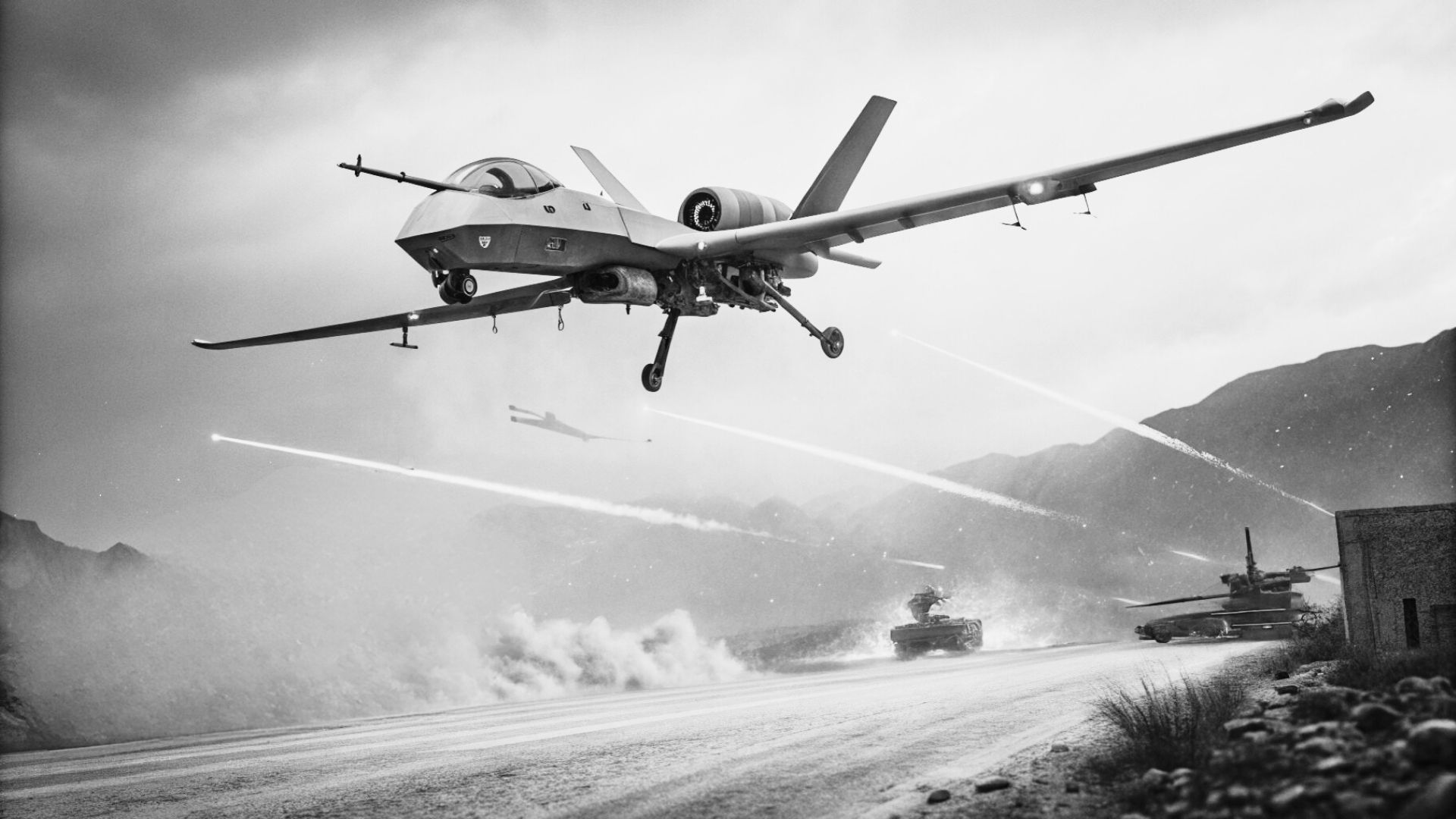

Dynamatic Technologies has unveiled plans for a next-generation loitering munition called “Super Kaatil,” marking a significant advancement in India’s unmanned strike capabilities. Designed as a supersonic unmanned aerial vehicle (I-JAV), the system aims to combine high-speed penetration with autonomous precision targeting, expanding the role of loitering munitions in contested battle environments.
The Super Kaatil is expected to have a maximum take-off weight of around 100 kg and will be powered by a compact jet engine, enabling supersonic performance—an uncommon feature in this category, which is typically dominated by subsonic systems. It is projected to carry a 35 kg warhead and deliver a strike range of up to 350 km, positioning it for deep-strike missions against high-value targets.
This new platform builds on the earlier Kaatil loitering munition, a 12 kg-class system with a 100 km range. The existing Kaatil has already demonstrated strong performance in electronic warfare environments, including full operational capability in GNSS-denied conditions, ensuring mission continuity even in heavily jammed or spoofed scenarios.
The Kaatil system incorporates advanced navigation methods that reduce reliance on satellite positioning, enabling autonomous mission execution. It is also equipped with anti-drone sensors, allowing it to detect and counter hostile UAVs, thereby serving both offensive and defensive roles within a networked battlespace.
A key strength of the Kaatil family lies in its autonomous precision strike capability, using onboard processing and advanced algorithms to identify, track, and engage targets with minimal human input. The ability to attack from multiple angles—top, side, and reverse—enhances effectiveness against fortified and armored targets.
Additionally, the platform supports low-altitude terrain-following flight, particularly suited for mountainous regions, reducing detection risk and improving survivability against air defenses. Both Kaatil and Super Kaatil are designed with strong electronic warfare resilience, incorporating anti-jamming features, secure communications, and advanced command-and-control systems for real-time threat assessment and rapid engagement.
The ecosystem also emphasizes interoperability, enabling integration with other unmanned systems and loitering munitions. This includes swarm capabilities, where multiple UAVs can coordinate attacks, overwhelm defenses, and increase mission success rates.