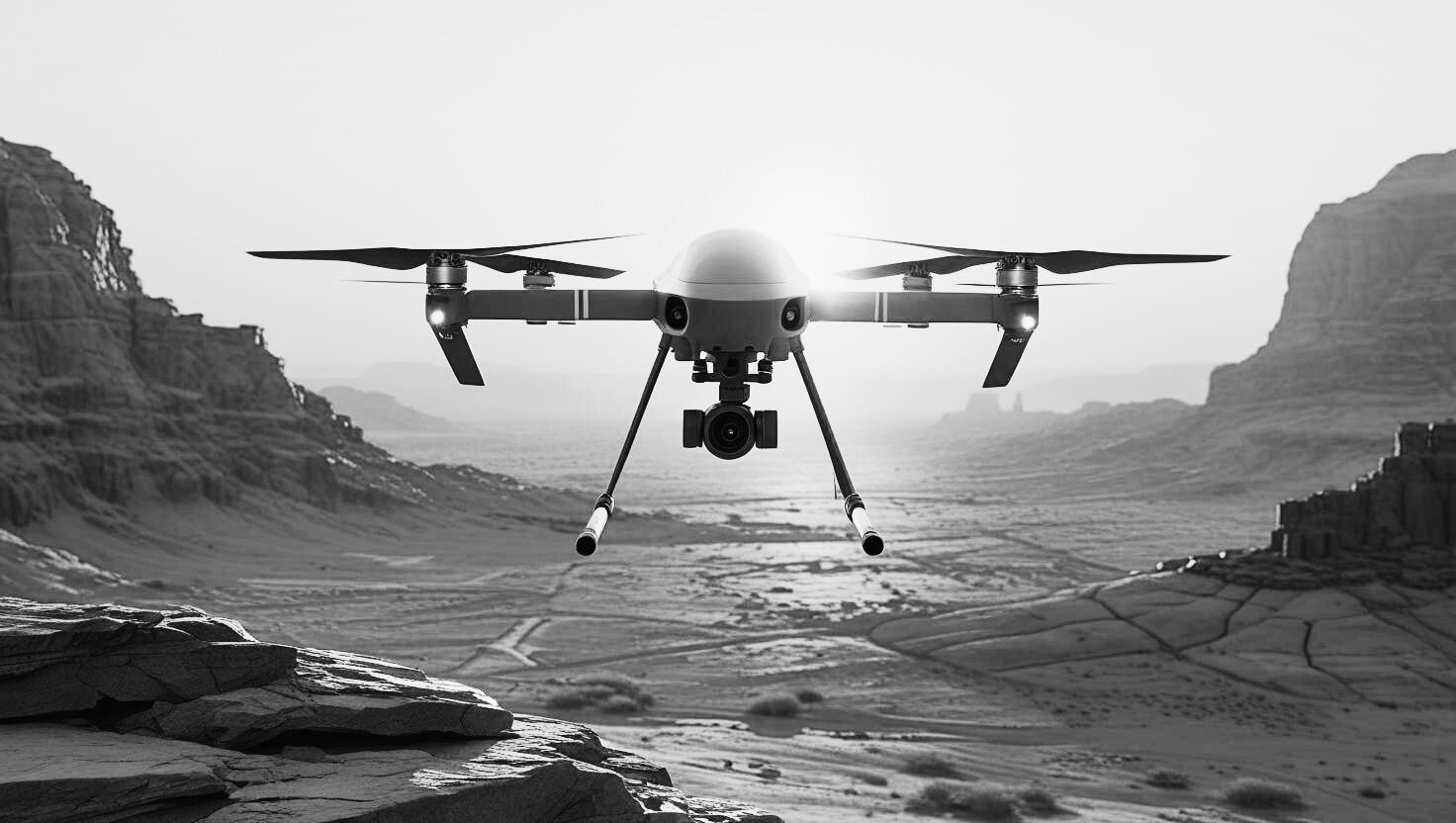

India’s growing defense startup ecosystem has reached another milestone with Kalavinka Technologies unveiling the Nyx MK-I, an indigenous autonomous loitering munition designed to operate in contested and GPS-denied environments. Developed by engineers from IIT Kharagpur, the system combines artificial intelligence, autonomous navigation, and cost-efficient manufacturing to address emerging requirements on modern battlefields.
The Nyx MK-I highlights the expanding role of Indian startups in developing advanced military technologies traditionally dominated by major defense companies. Its focus on autonomy, scalability, and indigenous engineering aligns with the country’s Atmanirbhar Bharat initiative and the armed forces’ increasing emphasis on network-centric warfare.
A key feature of the Nyx MK-I is its fire-and-forget autonomous operation. Instead of relying continuously on communication links or Global Navigation Satellite Systems (GNSS), including GPS, the system uses onboard sensors and artificial intelligence for navigation. This enables it to continue operating when satellite navigation signals are unavailable, jammed, or deliberately disrupted by electronic warfare.
The ability to function without continuous dependence on satellite navigation is becoming increasingly important as modern conflicts demonstrate the growing use of GPS jamming and spoofing. Autonomous navigation can reduce exposure to external signal disruptions and improve the system’s ability to operate in heavily contested electromagnetic environments.
Kalavinka Technologies states that the Nyx MK-I has been developed entirely in-house. Its development covers areas ranging from computer-aided design and aerodynamic simulations to embedded computing architecture and software integration. Such domestic development can strengthen India’s technological base while reducing reliance on foreign intellectual property and critical components.
The loitering munition is intended for precision attacks against soft targets, forward positions, and vulnerable tactical assets. Loitering munitions combine surveillance and precision-strike functions, allowing them to search an assigned area before engaging an identified target. This provides greater flexibility against mobile and time-sensitive targets compared with conventional artillery or missile systems.
Another important characteristic is the Nyx MK-I’s low-cost and attritable design philosophy. The system is intended for affordable mass production rather than deployment in limited numbers as an expensive weapon. Attritable platforms can be fielded in larger quantities, allowing military forces to accept the loss of individual systems without incurring excessive replacement costs.
The platform has also been developed with swarm operations in mind. According to Kalavinka Technologies, multiple Nyx MK-I systems could operate in coordination, enabling simultaneous attacks from different directions. Such tactics can place additional pressure on air-defense networks by increasing the number of targets that must be detected, tracked, and intercepted.
Artificial intelligence can support coordinated autonomous operations while reducing the workload placed on human operators. The system’s emphasis on operation in electronic warfare environments also reflects lessons from recent conflicts, where control of the electromagnetic spectrum has become increasingly important.
The Nyx MK-I further demonstrates the growing contribution of Indian startups to the country’s defense innovation ecosystem. Startups are increasingly developing technologies in areas such as unmanned systems, AI, robotics, autonomous vehicles, and advanced sensors, complementing the work of DRDO, public-sector organizations, and established private defense companies.
Government initiatives such as Innovations for Defence Excellence (iDEX) have also created opportunities for startups to develop technologies aligned with the operational needs of the Indian Armed Forces.
As militaries continue investing in autonomous and AI-enabled systems, loitering munitions are likely to play an increasingly important role in future operations. Their combination of precision strike capability, autonomous operation, contested-environment performance, and potential swarm deployment makes systems such as the Nyx MK-I relevant to both conventional and asymmetric warfare.