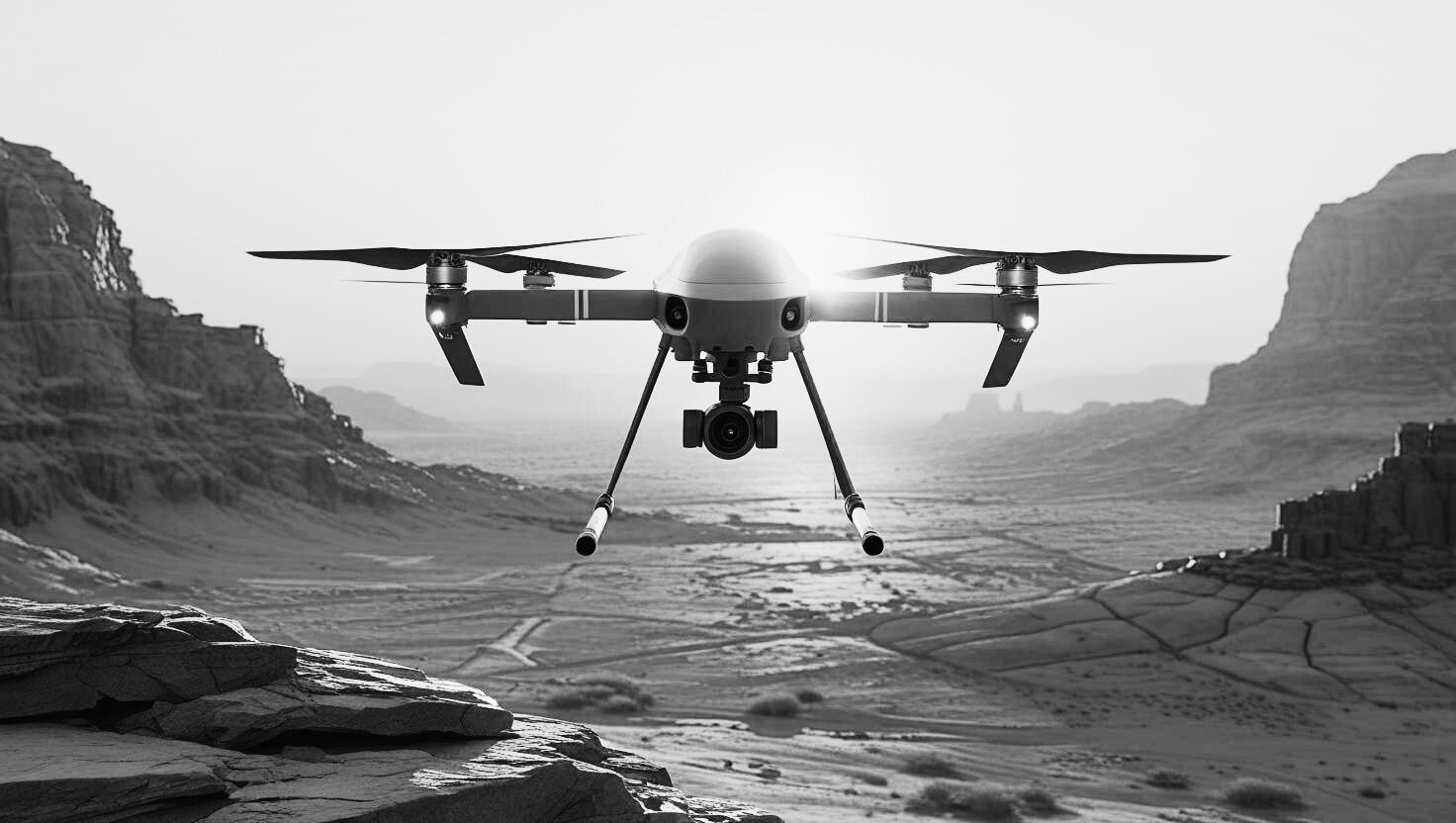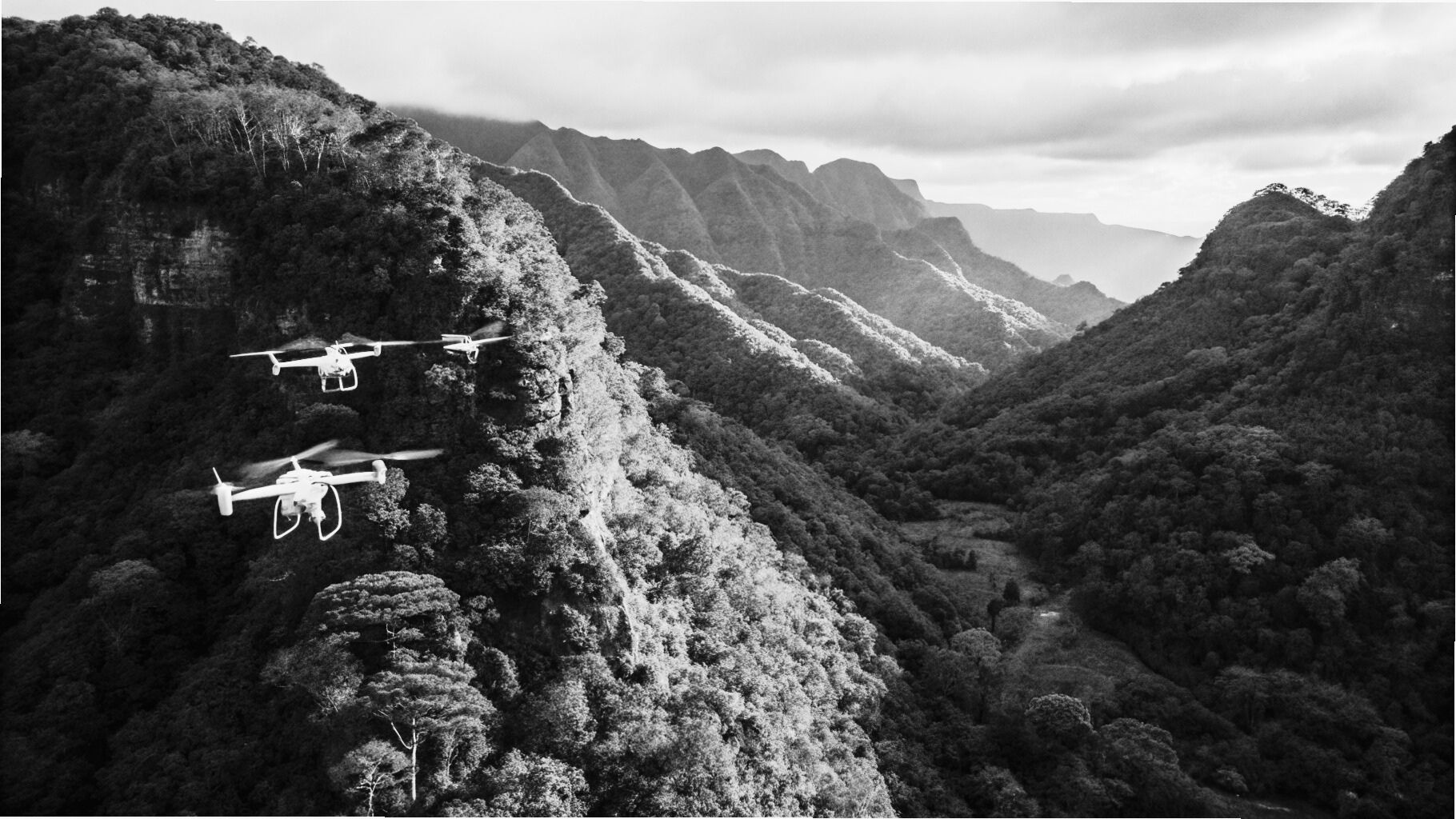
India’s growing unmanned systems sector continues to gain momentum as startup Flying Wedge Defence and Aerospace has announced plans to develop a 1-ton Medium Altitude Long Endurance (MALE) version of its Kaalbhairav Unmanned Aerial Vehicle (UAV). According to the company, the larger platform will be capable of operating at altitudes of up to 20,000 feet Above Mean Sea Level (AMSL), placing it in the category of tactical ISR and light strike UAVs.
The new UAV will build upon the design architecture of Flying Wedge’s existing Kaalbhairav platforms, retaining the distinctive twin-boom tail arrangement and pusher-propeller configuration. This aerodynamic setup is widely used in UAV systems because it offers several operational advantages, including improved propeller efficiency, unobstructed forward sensor placement, and enhanced stability during long-endurance missions. By scaling this configuration into the 1-ton class, the company appears to be aiming for an optimal balance between payload capacity, endurance, and mission flexibility.
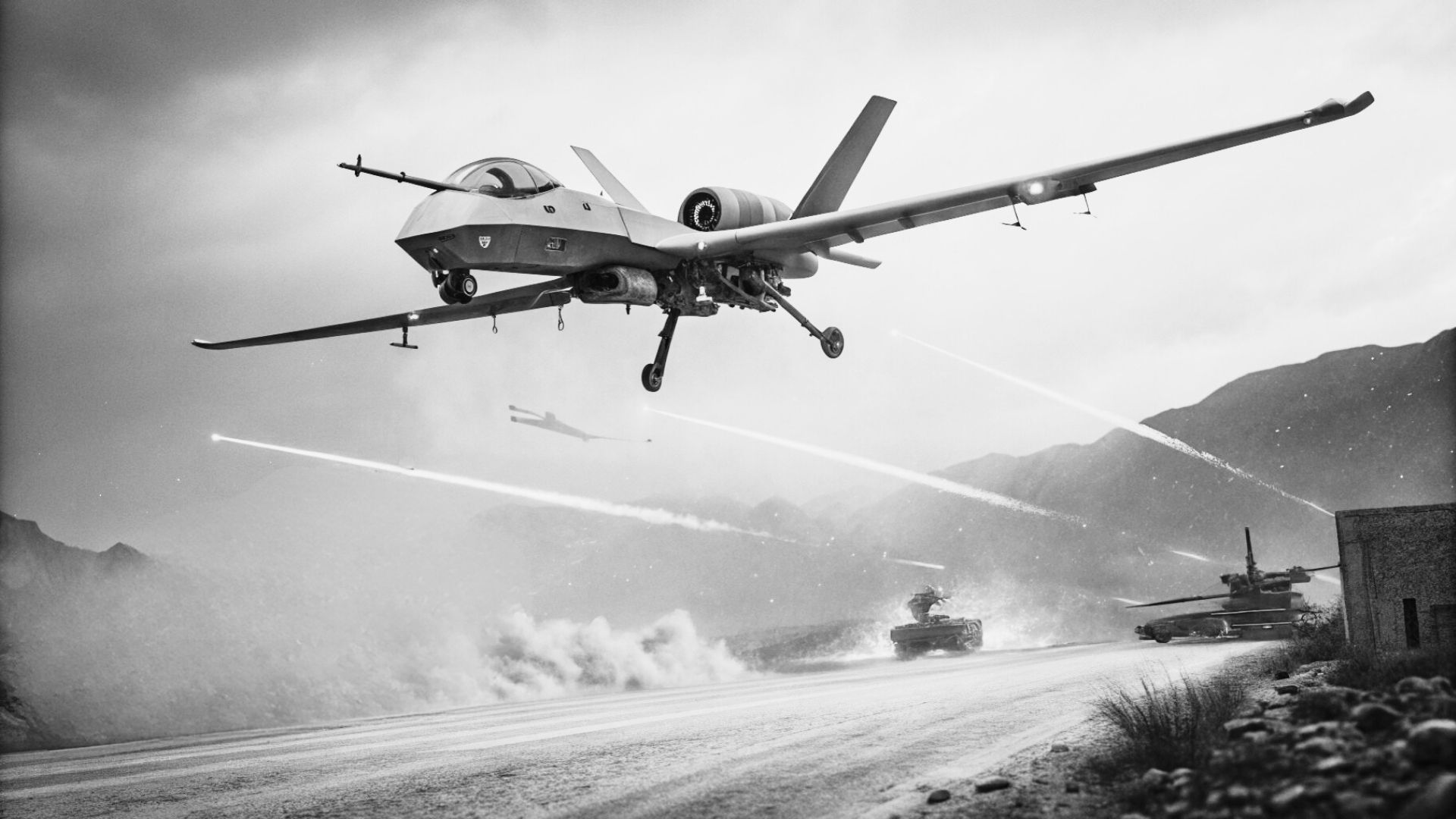
Flying Wedge has indicated that the MALE Kaalbhairav will primarily focus on Intelligence, Surveillance, and Reconnaissance (ISR) operations, a capability increasingly critical for modern military missions. With its planned endurance and altitude performance, the UAV could support border monitoring, maritime surveillance, and battlefield reconnaissance operations. The company has also confirmed that the platform will include provisions for weapon integration, potentially enabling precision-strike missions and positioning it alongside modern multi-role MALE UAV concepts that combine surveillance and combat capabilities.
The 1-ton weight category typically allows for the integration of advanced mission payloads such as electro-optical/infrared (EO/IR) sensors, synthetic aperture radar (SAR), communication relay systems, and lightweight precision-guided munitions. If successfully developed, the Kaalbhairav MALE UAV could enter a segment currently dominated by systems comparable to the MQ-1 Predator class, while being tailored specifically to India’s operational and cost requirements.
Although detailed technical specifications such as endurance, operational range, propulsion system, and weapons roadmap have not yet been disclosed, the announcement reflects a larger trend within India’s private defence sector. Increasingly, Indian startups are moving beyond small tactical drones and entering the far more complex MALE UAV category, traditionally dominated by imports and state-led programs. This shift highlights growing confidence and capability within India’s domestic aerospace ecosystem.