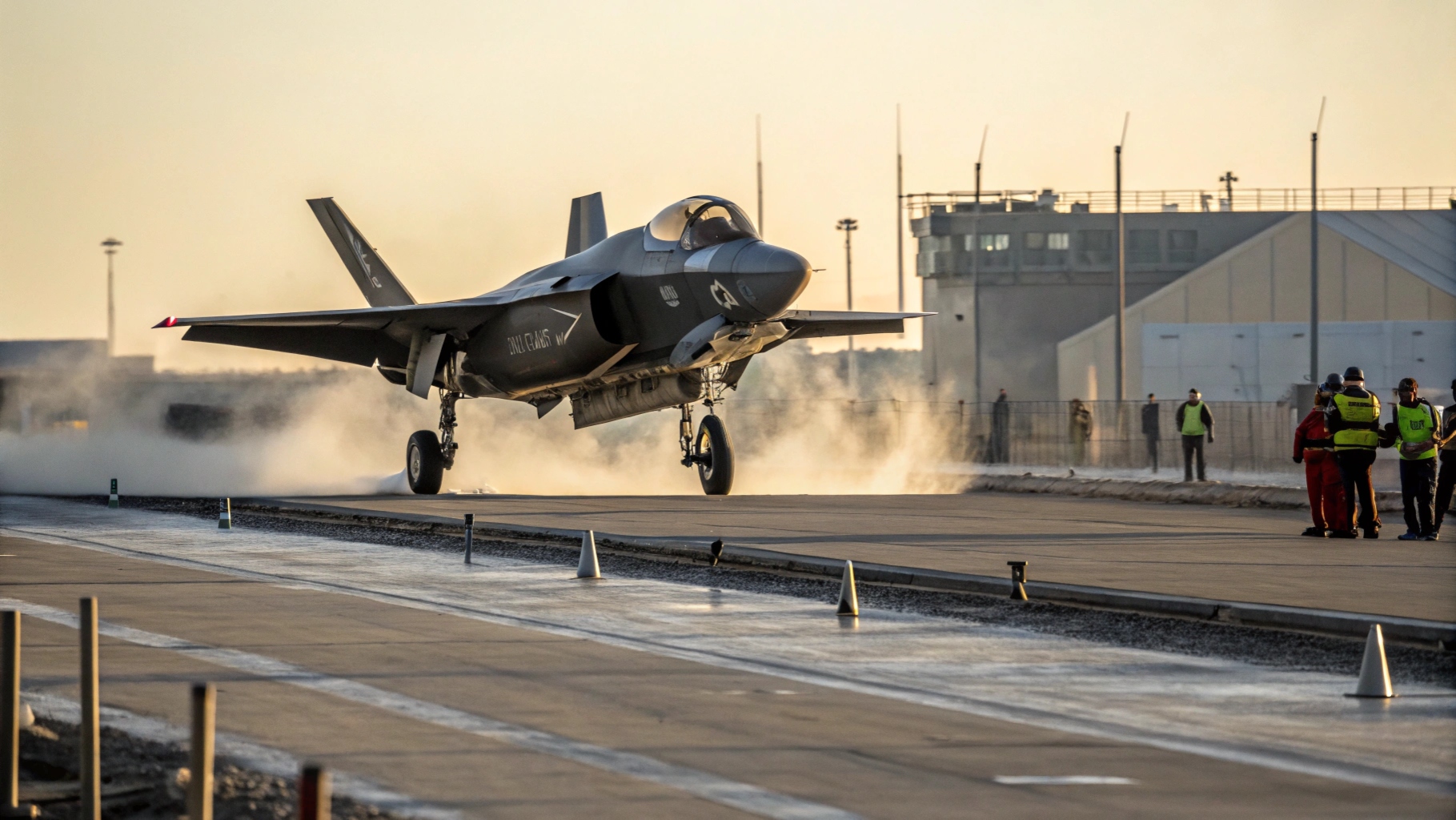
When Turkey unveiled its first next-generation fighter near Ankara, it marked more than a new aircraft—it signaled a decisive push toward aerospace independence. The TAI TF KAAN embodies this ambition, combining stealth design, advanced sensors, and digital avionics into a fifth-generation multirole platform.
The TF KAAN—earlier known as TF-X or Milli Muharip Uçak—is a twin-engine stealth fighter under development by Turkish Aerospace Industries. Designed for air superiority and precision strike missions, it integrates low-observable features, sensor fusion, and network-centric capabilities to operate effectively in contested environments. The aircraft is intended to replace the Turkish Air Force’s F-16 fleet from the late 2020s, while also serving as a potential export platform for countries such as Spain, Saudi Arabia, and Indonesia.
The program traces its origins to 2010, when Turkey initiated efforts to develop an indigenous fighter. Early design studies included collaboration with Saab, with a twin-engine configuration ultimately selected for improved performance and survivability. Officially named KAAN in 2023, the aircraft achieved its maiden flight in February 2024, advancing into the testing phase.
KAAN’s design focuses on stealth and aerodynamics, featuring internal weapon bays and reduced radar signature. Its twin-engine setup enables high thrust and potential supercruise capability. The aircraft incorporates advanced avionics, including the MURAD AESA radar and electronic warfare systems developed by ASELSAN, supported by AI-driven sensor fusion to enhance situational awareness.
Initial prototypes are powered by General Electric F110 engines, with plans to transition to indigenous engines such as the TF35000 in later variants. The platform offers balanced air-to-air and air-to-ground capability, modular upgrade potential, and advanced networking features.
However, challenges remain, including validation of full stealth performance and the timeline for indigenous engine development. Despite this, KAAN positions Turkey among a select group of nations developing fifth-generation fighters. With multiple prototypes scheduled for testing through 2026 and production expected by 2028–2029, the program is steadily progressing toward operational deployment and long-term competitiveness.