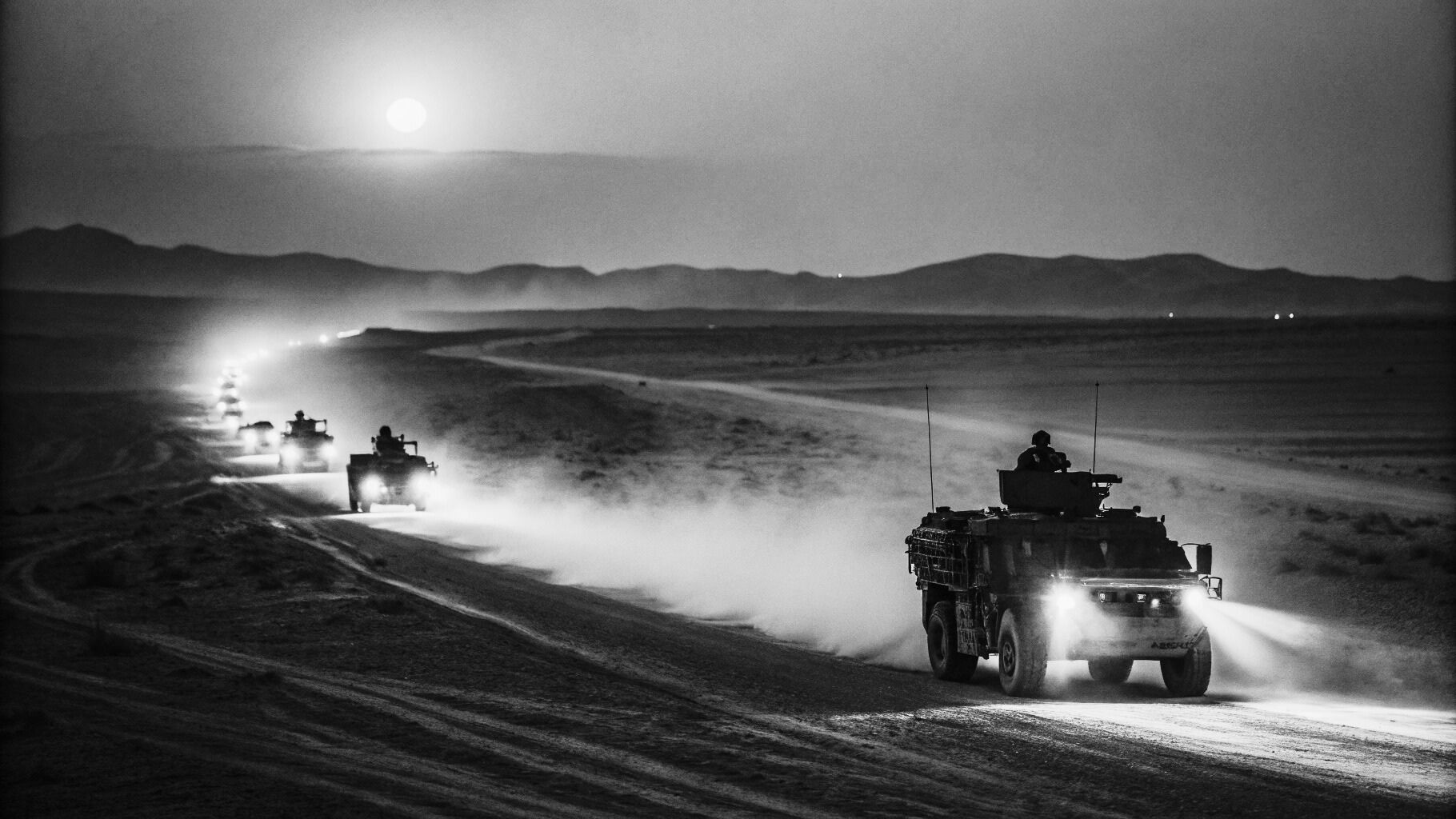
Speed over protection. Mobility over mass. The M1301 Infantry Squad Vehicle (ISV) was developed with one clear objective: move infantry squads rapidly across the battlefield and into position with maximum flexibility.
Built for expeditionary and airborne operations, the vehicle reflects the US Army’s growing emphasis on fast-moving, highly mobile warfare in complex operational environments. Here’s a closer look at how the M1301 works, why it is important, and what lies ahead for the platform.
What Is the M1301 Infantry Squad Vehicle?
The M1301 ISV is a lightweight, all-terrain transport platform designed for the US Army’s Infantry Brigade Combat Teams. Rather than relying on heavy armor, the vehicle focuses on speed, maneuverability, and transportability, allowing a full nine-member infantry squad to move rapidly across difficult terrain.
The vehicle can be carried internally inside helicopters such as the CH-47 Chinook or transported via sling load beneath rotary-wing aircraft, making it particularly suited for airborne insertions and air assault missions.
Development Background
The ISV program was launched to improve tactical mobility for light infantry formations, which traditionally relied heavily on foot movement during operations. This limitation reduced operational tempo and troop endurance across large combat zones.
Developed by General Motors Defense alongside Ricardo Defense, the vehicle incorporates technology derived from commercial off-road racing systems and is based largely on the Chevrolet Colorado ZR2 platform. By leveraging commercial automotive components, the Army reduced development costs while accelerating production timelines and ensuring reliability.
Vehicle Configurations
Although primarily designed as a troop carrier, the M1301 features a modular architecture that supports multiple mission configurations, including:
Standard troop carrier for nine personnel
Command-and-control variant with integrated communications equipment
Weapons carrier capable of mounting machine guns and support systems
Future versions could also support reconnaissance, logistics, or specialized battlefield roles.
Operational Design and Capabilities
The ISV is optimized for rapid deployment, maneuverability, and mission adaptability rather than direct frontline combat.
Key Features
Lightweight structure for helicopter transport and rapid insertion
High-speed off-road mobility enabled by racing-inspired suspension systems
Compact dimensions compatible with rotary-wing aircraft transport
Open architecture design supporting mission-specific modifications
Advantages
The M1301 significantly improves infantry mobility, enabling troops to move faster and cover larger operational areas than traditional foot patrols. Its helicopter deployability extends operational reach into remote, austere, or contested regions.
The use of commercial components also simplifies maintenance, reduces logistical burden, and lowers lifecycle costs.
Limitations
The vehicle’s greatest compromise is protection. Unlike armored fighting vehicles, the ISV offers minimal armor, leaving troops vulnerable to small-arms fire, improvised explosive devices (IEDs), and battlefield fragmentation threats.
As a result, the platform is intended for mobility and support missions rather than direct assaults in high-intensity combat environments.
Global Relevance and Operational Role
Currently fielded mainly by the US Army, the M1301 supports airborne and light infantry formations by bridging the gap between foot-mobile troops and heavier armored platforms.
Although exports remain limited, the vehicle aligns with broader global trends favoring lighter, rapidly deployable forces. Countries focused on expeditionary warfare capabilities, including the UK and UAE, could view platforms like the ISV as increasingly relevant for future operations.
Future Outlook
The M1301 ISV represents the military’s broader transition toward distributed operations, rapid maneuver warfare, and flexible force deployment.
Future upgrades may introduce improved protection systems, hybrid propulsion technologies, or autonomous capabilities to expand battlefield effectiveness. While it is not intended to replace heavily armored combat vehicles, the ISV is expected to remain a valuable asset for missions where speed, mobility, and rapid access are critical.