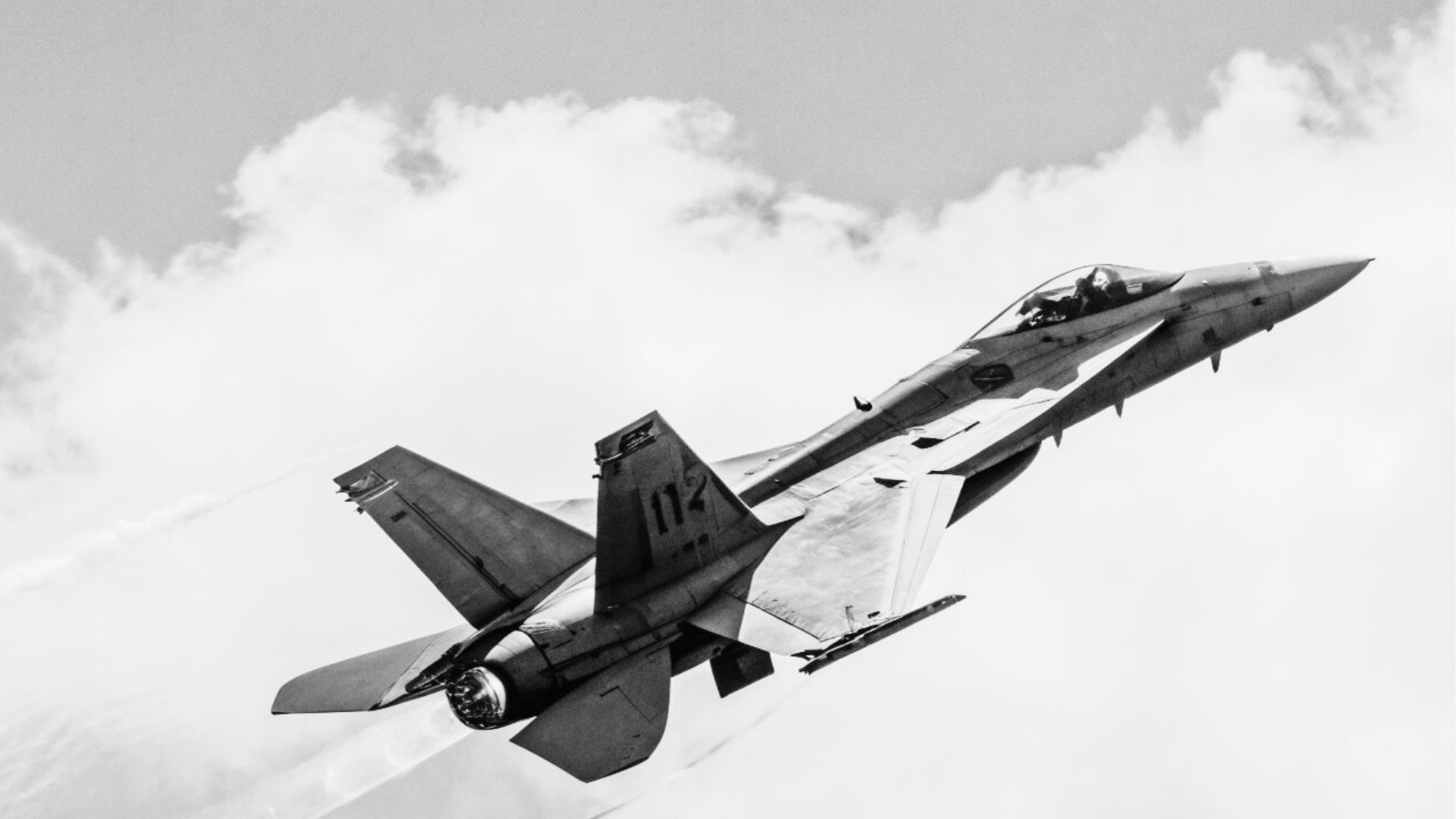
Russia’s MiG-35 does not attempt to compete directly with the stealth-focused mystique of fifth-generation fighters. Instead, it offers a practical and cost-effective multirole combat solution built on the combat-proven MiG-29 lineage.
Combining decades of Soviet and Russian aerospace engineering experience, the aircraft is designed to provide flexibility, survivability, and modern combat capability without the complexity and cost associated with advanced stealth platforms. Here’s a closer look at the MiG-35, its capabilities, and its role in today’s air combat environment.
What Is the MiG-35?
The MiG-35 is an advanced evolution of the MiG-29 platform, redesigned to meet the demands of modern high-threat combat environments.
Developed by Mikoyan under the United Aircraft Corporation, the fighter integrates upgraded avionics, modern sensors, and expanded mission systems while retaining the maneuverability and combat agility associated with earlier MiG fighters.
Built as a frontline multirole aircraft, the MiG-35 is intended to conduct air superiority, strike, and reconnaissance missions while operating in layered air defense environments under all-weather conditions.
Origins and Development
The aircraft traces its origins to upgraded MiG-29M and MiG-29K variants developed to modernize Russia’s tactical fighter fleet. Development accelerated during the 2000s as Russia sought an export-friendly and lower-cost alternative to heavier fighters such as the Su-35.
Officially unveiled in 2007, the MiG-35 has since undergone multiple refinements. Although selected for limited service with the Russian Air Force, large-scale procurement has progressed slowly due to budget priorities and internal competition from other advanced fighter platforms.
MiG-35 Configurations
The aircraft family currently includes two main variants:
MiG-35: Single-seat multirole fighter variant
MiG-35D: Two-seat combat-capable trainer and strike version
Both versions offer similar operational performance, while the two-seat model provides added training and mission flexibility.
How the MiG-35 Operates
Propulsion and Flight Performance
The MiG-35 uses upgraded RD-33 engines that deliver improved thrust, fuel efficiency, and reduced smoke emissions compared to earlier MiG-29 variants. Engine service life has reportedly increased to 4,000 flight hours.
Certain configurations also incorporate thrust-vectoring nozzles, significantly enhancing maneuverability during close-range dogfights and high-intensity aerial combat.
Sensors and Avionics
The aircraft is equipped with the Zhuk-AE or Zhuk-AM radar system capable of tracking up to 30 aerial targets at ranges of approximately 160 kilometers while simultaneously engaging six priority threats.
Complementing the radar is an advanced optoelectronic targeting suite that improves target detection, tracking, and engagement capability in both day and night operations. Together, these systems allow the MiG-35 to detect, prioritize, and engage multiple threats simultaneously.
Weapons and Multirole Capability
The MiG-35 can deploy a broad range of air-to-air and air-to-ground weapons, including precision-guided munitions. Its multirole design enables rapid transition between air combat, strike, and reconnaissance missions within the same sortie.
Key Strengths
Strong multirole flexibility for air superiority, strike, and reconnaissance operations
Advanced radar and electro-optical systems supporting long-range detection and multi-target engagement
High maneuverability supported by aerodynamic refinements and thrust-vectoring capability
Improved situational awareness through integrated avionics and battlefield networking
Lower acquisition and lifecycle cost compared to fifth-generation fighters
Enhanced reliability and reduced maintenance burden compared to legacy MiG platforms
Limitations
Lacks stealth features found in fifth-generation aircraft, reducing survivability in radar-dense battlespaces
Limited production numbers restrict broader operational deployment
Faces competition from more heavily armed Russian fighter platforms such as the Su-35
Export potential is constrained by sanctions and geopolitical pressures
Global Position and Use
The MiG-35 has seen limited operational service mainly within Russia and has achieved only modest export success. Internationally, it competes against platforms such as the American F-16 and China’s JF-17.
The aircraft occupies a middle ground, offering more advanced sensors and combat performance than many lower-cost fighters, while lacking the stealth and deep network integration of Western fifth-generation aircraft.
Future Outlook
The long-term future of the MiG-35 remains uncertain but still relevant. Many air forces continue to seek affordable multirole fighters that balance performance with operational cost.
However, the broader direction of modern air warfare increasingly favors stealth, network-centric operations, and unmanned systems. In that evolving environment, the MiG-35 may ultimately serve as a transitional platform bridging older fourth-generation fighters and future combat systems.
In many ways, the aircraft reflects a practical reality in global military aviation: not every nation requires the most technologically advanced fighter, but every nation requires an aircraft suited to its operational needs and budget.