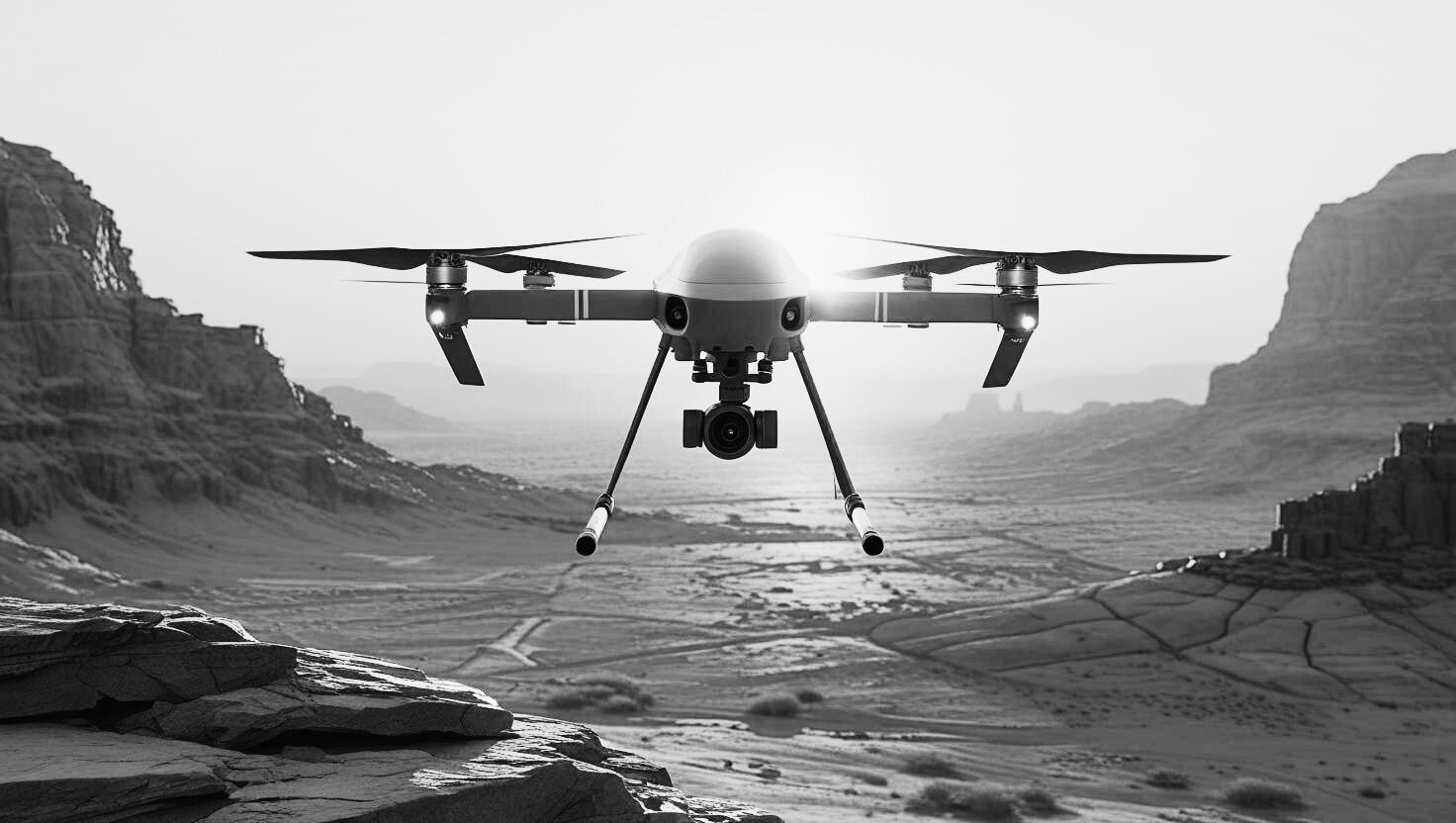

Anadrone Systems Private Limited, a Bengaluru-based defence technology firm, has announced the development of SHAKTI, a domestically designed long-range loitering munition capable of striking targets at ranges of up to 1,000 kilometres. The initiative underscores the rapid growth of India’s private-sector drone industry, which is increasingly expanding into advanced autonomous strike systems and next-generation UAV technologies.
Designed as a long-endurance kamikaze drone, SHAKTI is intended to carry out precision attacks deep inside contested territory. The company claims the platform will be capable of delivering a 25-kg explosive payload while maintaining an endurance of approximately four hours. These specifications place it among a new class of strategic loitering munitions developed for long-range attacks on high-value military infrastructure, including radar sites, command posts, and logistics networks.
The development comes amid a global shift toward the use of autonomous strike drones as cost-effective alternatives to traditional manned aircraft and missile systems. Loitering munitions have gained prominence in recent conflicts due to their ability to combine intelligence gathering, target identification, and precision strike capabilities within a single platform.
To support accurate targeting, SHAKTI is expected to feature a wide-angle electro-optical camera system that provides real-time visual confirmation before engagement. This capability enables operators to validate targets and improve strike accuracy, particularly against mobile or fleeting threats.
The UAV’s design appears to prioritise stealth and long-range performance. Released visuals show a tailless flying-wing architecture with a blended fuselage and sharply swept wings, a configuration known for reducing drag and lowering radar signatures. The smooth external profile and limited protrusions suggest that survivability and low observability were key design considerations.
The aircraft’s internal layout also appears optimised for efficient long-duration flight, with the propulsion system integrated into the fuselage to enhance aerodynamic performance. The overall configuration bears similarities to advanced low-observable unmanned strike platforms currently under development in several countries.
Marketing imagery depicts SHAKTI operating over rugged mountainous landscapes, indicating that the platform may be intended for missions in high-altitude regions and difficult terrain. Such environments are increasingly relevant to India’s security requirements along its northern frontiers.
As battlefield doctrines continue to evolve, India’s investment in long-range loitering munitions reflects the growing importance of unmanned precision-strike capabilities. Offering lower acquisition and operational costs than manned aircraft or cruise missiles, systems like SHAKTI could provide a persistent and flexible option for reconnaissance and precision engagement while minimising risks to personnel and high-value assets.