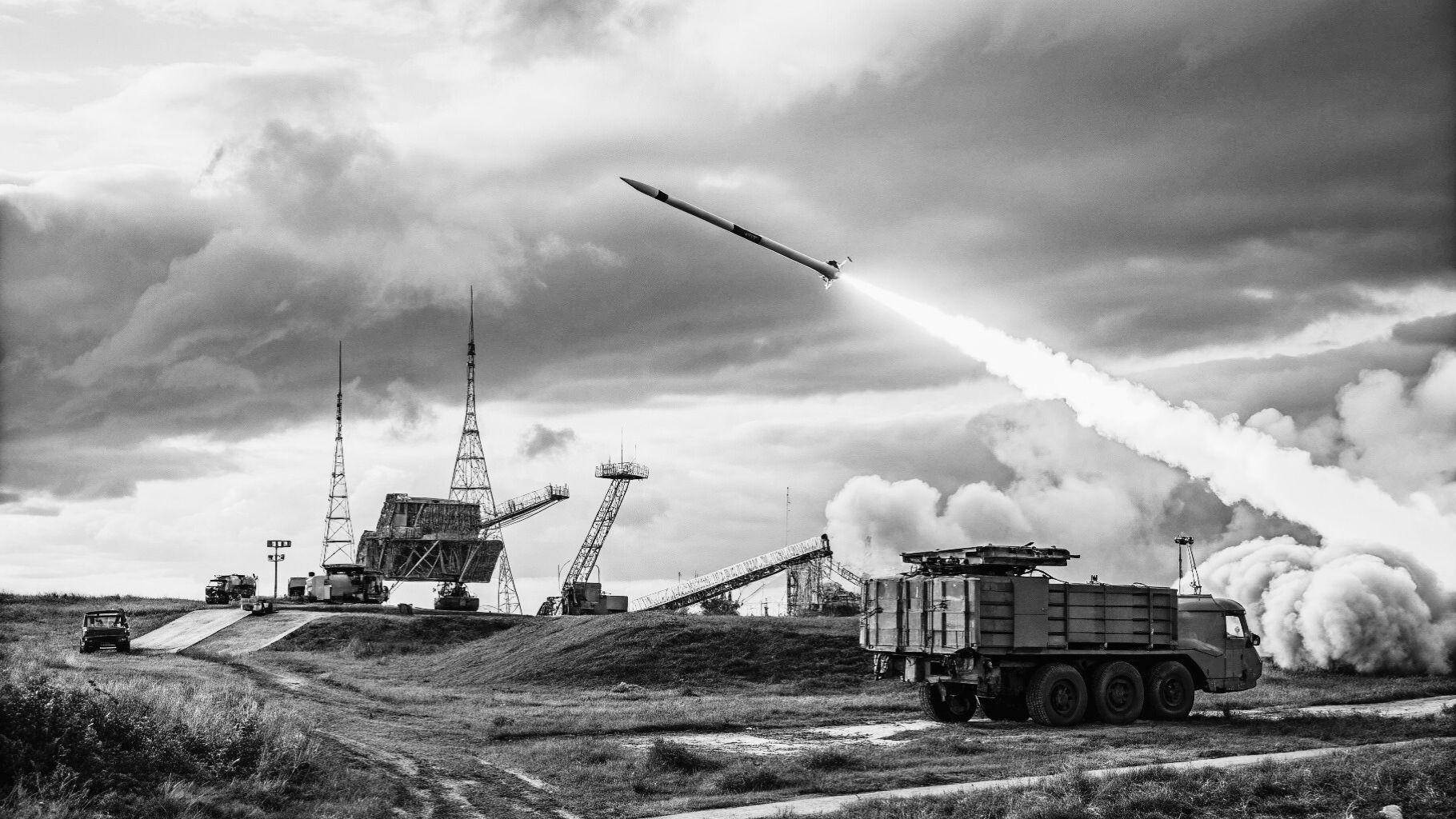
India’s next-generation long-range air-to-air missile programme, Astra Mk3 — officially associated with the Solid Fuel Ducted Ramjet (SFDR)-based “Gandiva” project — is now entering its most crucial phase of development, with integrated airborne trials expected to dominate the 2027–2028 timeline ahead of production clearance.
The upcoming test campaign is expected to determine whether India can operationally deploy one of its most ambitious indigenous Beyond-Visual-Range Air-to-Air Missile (BVRAAM) systems, reportedly capable of engaging highly maneuverable aerial threats at ranges extending up to 350 kilometers.
According to the current roadmap, the Astra Mk3 programme is transitioning from propulsion validation and subsystem integration into full airborne testing and combat-envelope evaluation.
The 2026 development phase has primarily focused on validating the missile’s Solid Fuel Ducted Ramjet propulsion system. Unlike conventional rocket-powered BVRAAMs that rapidly lose energy after motor burnout, the SFDR system enables sustained powered flight over significantly longer distances while retaining high terminal energy and maneuverability during the interception phase.
Earlier FT-01 and FT-02 trials from Chandipur reportedly validated critical elements of the propulsion architecture, including booster separation, sustained ramjet combustion, and fuel-flow throttling behaviour. These tests are considered foundational to achieving Astra Mk3’s extended engagement capability.
With propulsion systems now reportedly validated at baseline level, DRDO’s attention has shifted toward sensor integration and refinement of electronic systems. A key focus is the missile’s indigenous Gallium Nitride (GaN)-based AESA terminal seeker, expected to deliver improved target discrimination, enhanced electronic counter-countermeasure (ECCM) performance, and superior terminal tracking capability compared to earlier seeker generations.
The airborne integration phase is expected to begin in 2027 using the Indian Air Force’s Su-30MKI as the primary launch platform. The aircraft was selected due to its high payload capacity, advanced mission computing systems, and proven track record supporting indigenous weapons integration programmes.
Initial trials during 2027 are expected to focus on captive carriage and systems integration rather than live missile launches. These tests will evaluate aerodynamic compatibility, safe missile separation behaviour, and stability of digital communication between the Astra Mk3 and the aircraft’s onboard mission systems.
Special emphasis will reportedly be placed on validating the missile’s two-way datalink architecture to ensure uninterrupted communication between the missile and the Su-30MKI throughout all flight phases. The captive-flight campaign will also assess safe missile release during high-G combat maneuvers, a critical requirement for operational frontline deployment.
Such integration testing is especially important because ramjet-powered long-range missiles generate different aerodynamic and thermal stresses compared to conventional rocket-powered BVRAAMs.
The programme is then expected to move into its most decisive stage in 2028: full live-fire and combat-envelope validation. This phase will likely involve multiple launch trials against highly maneuverable aerial targets, drones, and potentially low radar cross-section targets intended to simulate stealthier threats.
A central objective of the 2028 campaign will be validating Astra Mk3’s reported 350-kilometer engagement range under realistic operational conditions. DRDO and the Indian Air Force are also expected to intensively evaluate terminal homing performance under electronic warfare conditions, particularly against hostile jamming environments where ECCM capability becomes critical.
The GaN AESA seeker’s ability to maintain target lock amid heavy electronic interference may ultimately prove decisive in securing operational clearance. The live-firing phase will additionally examine the SFDR propulsion system’s ability to sustain terminal energy at extended ranges, an area where traditional rocket-powered missiles often experience major performance degradation.
If development progresses successfully, Astra Mk3 could become India’s most advanced indigenous air-to-air missile to date. The missile is expected to operate in a capability bracket significantly above Astra Mk1 and Astra Mk2, placing India among a small group of nations fielding ramjet-powered long-range BVRAAM systems.
The combination of SFDR propulsion, GaN AESA seeker technology, advanced ECCM capability, and long-range engagement architecture is intended to provide the Indian Air Force with enhanced stand-off combat capability against high-value airborne assets such as AWACS aircraft, aerial tankers, electronic warfare platforms, and long-range strike fighters.
Current planning reportedly targets completion of the live-fire campaign by late 2028, enabling DRDO and production agencies to move toward formal production clearance by the end of the year.