India’s Netra MkII Airborne Early Warning and Control System (AEW&CS) programme has entered the full-scale development phase, marking a major milestone in the country’s efforts to establish an indigenous, network-centric air defence architecture.
Unlike the original Netra MkI, which was based on the smaller Embraer ERJ-145 platform, the Netra MkII will utilize modified Airbus A321 commercial aircraft, placing India among the nations operating large airborne warning and control system (AWACS) platforms. The larger airframe is expected to significantly enhance India’s airborne surveillance, battle management, long-range target tracking, and integrated air defence capabilities over the coming years.
The Indian Air Force (IAF) has acquired six pre-owned Airbus A321 aircraft from Air India’s legacy fleet to serve as the foundation for the programme.
Compared to the Embraer-based platform, the Airbus A321 offers substantially greater electrical power generation, cooling capacity, mission endurance, radar aperture, and internal space, enabling the integration of next-generation Active Electronically Scanned Array (AESA) radars, electronic warfare systems, SIGINT payloads, operator workstations, and future upgrades.
The Ministry of Defence and DRDO’s Centre for Airborne Systems (CABS) have finalized an agreement with Airbus Defence and Space to carry out the extensive structural modifications required to convert the civilian aircraft into military surveillance platforms.
Under the programme, the six aircraft will be transported to Airbus facilities in Spain and France, where they will undergo “green aircraft” conversion. Passenger interiors will be removed, while the fuselage will be structurally reinforced to support the dorsal radar assembly and associated mission equipment.
Airbus will also install upgraded Auxiliary Power Units (APUs) capable of supplying the increased electrical power required for high-performance AESA radars, cooling systems, mission computers, and electronic warfare equipment. The cockpit and interior will be redesigned with military-standard avionics, mission operator consoles, communications systems, and airborne command-and-control infrastructure.
Indigenous Mission System Integration
Following structural conversion and certification, the aircraft will return to India for integration of indigenous mission systems. Adani Defence & Aerospace has reportedly been selected as the lead integration partner, working alongside DRDO and CABS.
Indian defence companies, including Bharat Electronics Limited (BEL) and Astra Microwave, are expected to supply key radar, communication, signal-processing, and electronic warfare technologies.
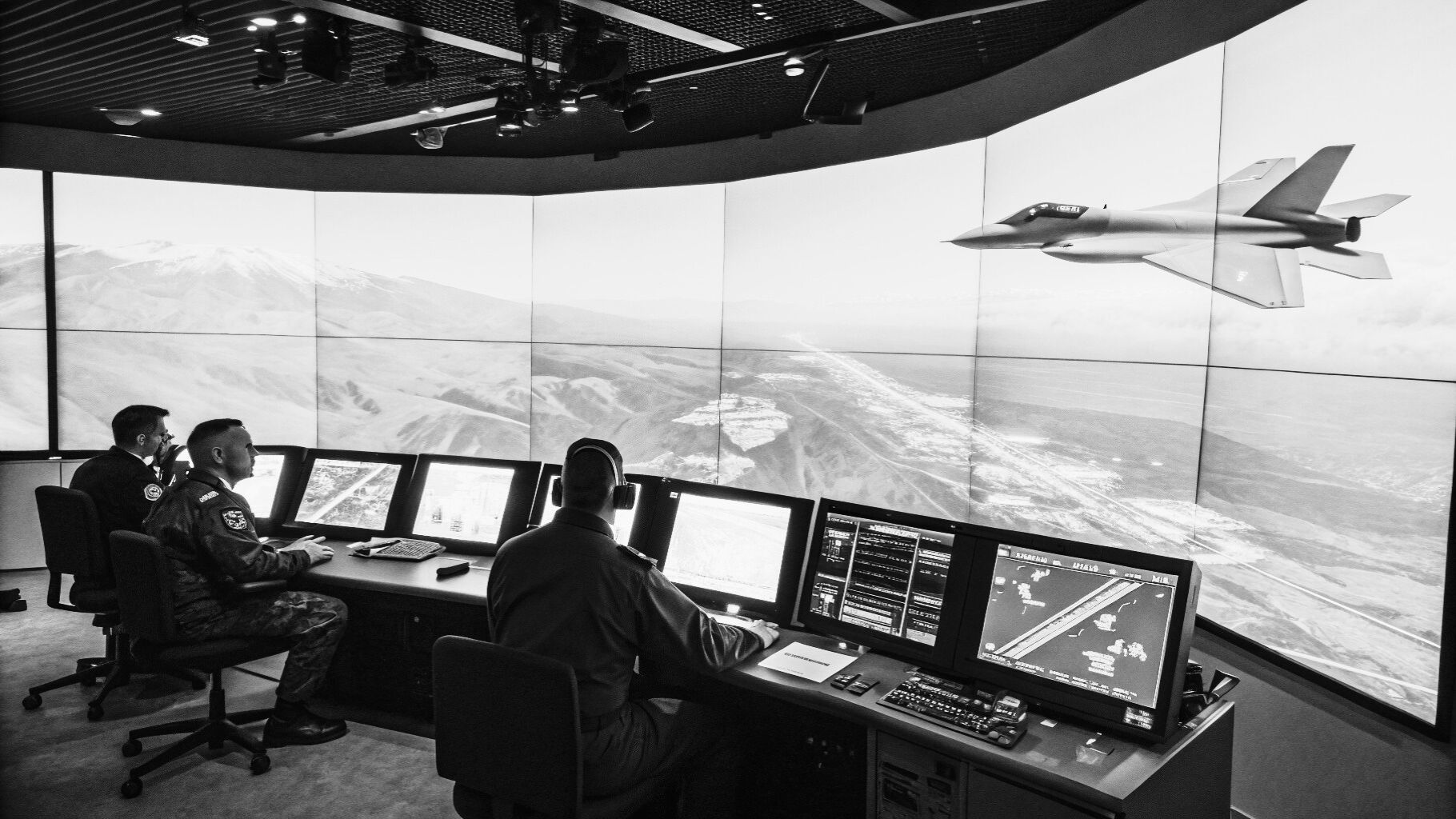
The Netra MkII is being developed not only as an airborne surveillance platform but also as an advanced airborne battle management and sensor-fusion node capable of integrating with India’s Integrated Air Command and Control System (IACCS).
The aircraft’s dorsal-mounted AESA radar is expected to provide approximately 240 to 300 degrees of surveillance coverage. To eliminate potential blind spots, an additional nose-mounted radar is also expected to enhance frontal-sector detection and provide comprehensive situational awareness.
A major technological highlight of the programme is the adoption of Gallium Nitride (GaN)-based AESA radar technology, which offers superior power efficiency, thermal management, and beam control compared with conventional Gallium Arsenide (GaAs) systems.
The radar is projected to detect large airborne targets at ranges exceeding 500–550 kilometres while maintaining the sensitivity needed to identify low radar cross-section threats such as cruise missiles, drones, and potentially stealth aircraft.
The larger Airbus platform also offers significantly improved endurance, operating above 40,000 feet with an endurance approaching eight hours without refuelling. Planned air-to-air refuelling capability will further extend mission duration, enabling sustained surveillance during high-intensity operations.
The Cabinet Committee on Security (CCS) has approved the revised funding structure for the programme, reflecting increased costs associated with structural conversion, radar development, electronic warfare integration, SIGINT and ELINT capabilities, and indigenous system development.
According to current timelines, the first Netra MkII prototype could begin flight testing between late 2026 and mid-2027. Initial trials will evaluate airworthiness, radar performance, electromagnetic compatibility, cooling efficiency, structural integrity, and overall mission system integration before operational deployment.