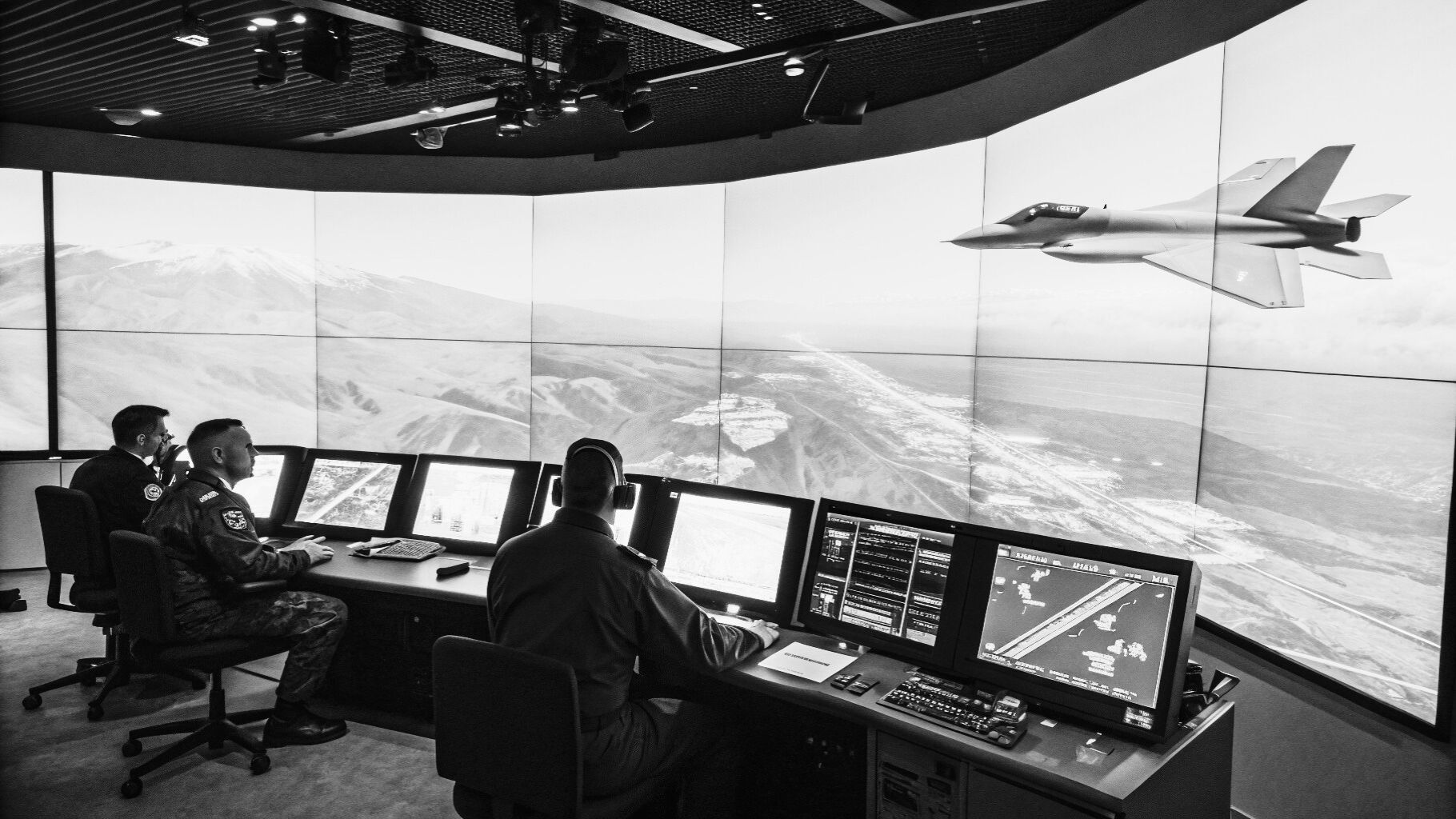
India’s Advanced Medium Combat Aircraft (AMCA) program is reportedly being designed with a long-term propulsion strategy that could enable the platform to evolve toward sixth-generation fighter capabilities by the 2040s. According to sources, the indigenous engine being jointly developed by France’s Safran and India’s Gas Turbine Research Establishment (GTRE) is being built around a modular architecture that will support future upgrades to variable cycle engine technology.
This marks a significant shift from earlier Indian fighter engine programs, where propulsion systems were generally designed as fixed configurations tied to a single aircraft generation. Under the AMCA roadmap, the aircraft’s engine bay, mounting interfaces, and surrounding structures are being engineered to accommodate future propulsion upgrades without major airframe redesigns.
While the initial AMCA prototypes will be powered by GE F414 engines and later AMCA Mk2 variants are expected to receive an indigenous Safran-GTRE turbofan in the 110–130 kN class, the platform is already being prepared for the integration of more advanced propulsion systems in the future.
At the heart of the strategy is a modular core engine concept. The engine is expected to begin service as a fifth-generation stealth fighter turbofan, but with a design that allows critical internal components such as compressors, turbines, and airflow management systems to be replaced while retaining the same external structure and aircraft interfaces.
This approach could allow India to introduce a variable cycle propulsion module in the 2040s without requiring extensive modifications to the aircraft. Variable cycle engines are widely viewed as a key sixth-generation technology because they can dynamically alter airflow characteristics, providing fuel-efficient high-bypass operation during cruising and high-thrust low-bypass performance during combat missions.
The addition of a third airflow stream would also significantly enhance thermal management, enabling future integration of power-hungry systems such as advanced electronic warfare suites, high-performance AESA radars, sensor-fusion systems, and potentially directed-energy weapons.
Although the concept offers substantial advantages, transitioning to variable cycle propulsion would require sophisticated FADEC software, advanced thermal management solutions, and the use of high-temperature materials such as Ceramic Matrix Composites (CMCs). India’s ongoing collaboration with France in advanced aerospace materials is expected to support these future developments.
By adopting a modular propulsion strategy from the outset, India aims to ensure the AMCA remains adaptable throughout its service life, avoiding the limitations that have constrained upgrades on many previous combat aircraft programs.