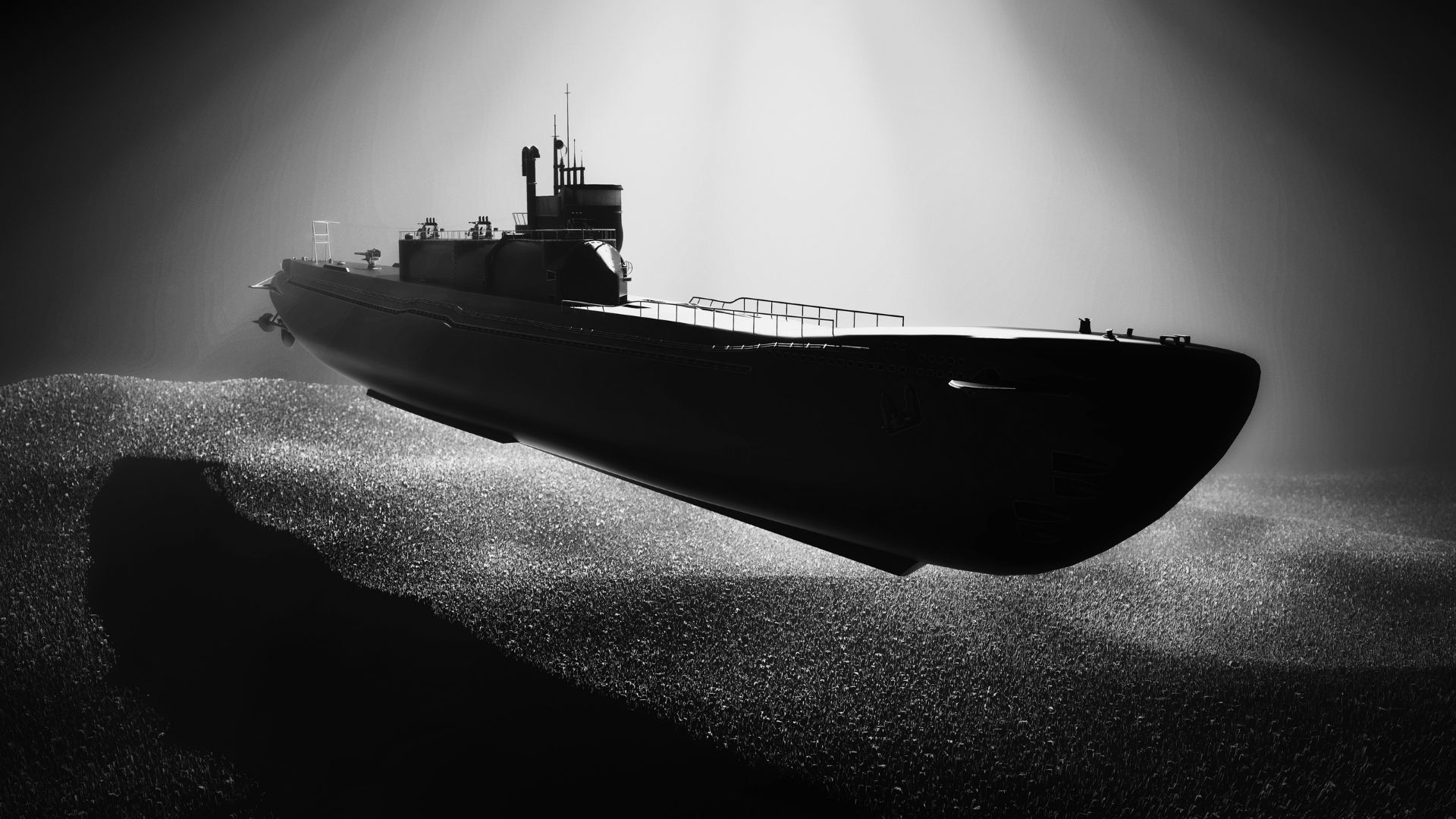
India’s plans to develop a next-generation indigenous conventional submarine under the Indian Navy’s Project-76 programme are beginning to spark a significant competition between state-owned Mazagon Dock Shipbuilders Limited (MDL) and private-sector defence major Larsen & Toubro (L&T), with both companies pursuing separate design concepts for the future platform.
According to sources familiar with the programme, MDL is working on an indigenous 3,000-ton-class conventional submarine concept that draws heavily on the experience gained from the Kalvari-class programme, itself derived from the French Scorpene design. Project-76 is expected to mark a major milestone for India as the country’s first fully indigenous conventional attack submarine initiative, reducing reliance on foreign-assisted programmes such as the Shishumar-class, Kalvari-class, and the forthcoming Project-751 submarines.
Unlike earlier projects that depended significantly on overseas design expertise, Project-76 aims to deliver a domestically designed submarine tailored to future operational requirements, including enhanced stealth, long-endurance patrol capabilities, land-attack missions, advanced sensor suites, and indigenous combat systems.
The Indian Navy is also reportedly exploring ways to accelerate development by leveraging design work previously undertaken by L&T under its SOV-400 programme. Originally conceived as a compact 400–500-ton midget submarine for special operations and littoral missions, the SOV-400 was never built but is understood to have undergone design validation by a European firm, providing confidence in its hydrodynamic performance and modular architecture.
Sources indicate that the modular design philosophy of the SOV-400 has enabled discussions on scaling the concept into a larger 2,500–3,000-ton conventional submarine suitable for frontline naval operations. By adapting an existing design framework rather than starting from a completely new design, the Navy hopes to reduce technical risks and shorten development timelines.
While MDL remains India’s most experienced builder of conventional submarines, L&T has steadily strengthened its credentials in the undersea warfare sector. The company has played a key role in fabricating hull sections for the Arihant-class and S4-class nuclear submarines, gaining valuable expertise in submarine construction, high-strength hull manufacturing, and strategic naval production.
L&T has also sought a greater role in conventional submarine programmes, previously partnering with Spain’s Navantia to offer the S-80 submarine under the Project-751 competition. However, the Indian Navy ultimately selected the MDL-TKMS partnership, which proposed a submarine based on technologies derived from the German U-212CD platform.
Despite that setback, Project-76 is increasingly viewed as L&T’s strongest opportunity to challenge MDL’s dominance in India’s conventional submarine sector. Meanwhile, MDL is reportedly developing an enhanced indigenous design informally referred to as the “Super Kalvari,” which is expected to incorporate greater displacement, improved endurance, advanced stealth features, upgraded combat systems, and a higher degree of indigenous technology integration while retaining key lessons from the Kalvari programme.
MDL’s extensive experience in assembling and integrating Scorpene-derived submarines provides a considerable advantage in areas such as pressure hull construction, acoustic management, combat management system integration, production processes, and lifecycle support. The shipyard is reportedly targeting the completion of a comprehensive conceptual design by around 2028, a timeline that broadly aligns with the expected maturity of the Navy-L&T concept.
The growing competition between MDL and L&T could ultimately prove beneficial for the Indian Navy by fostering innovation, strengthening indigenous submarine design capabilities, reducing dependence on foreign technology, and expanding India’s underwater warfare industrial ecosystem.