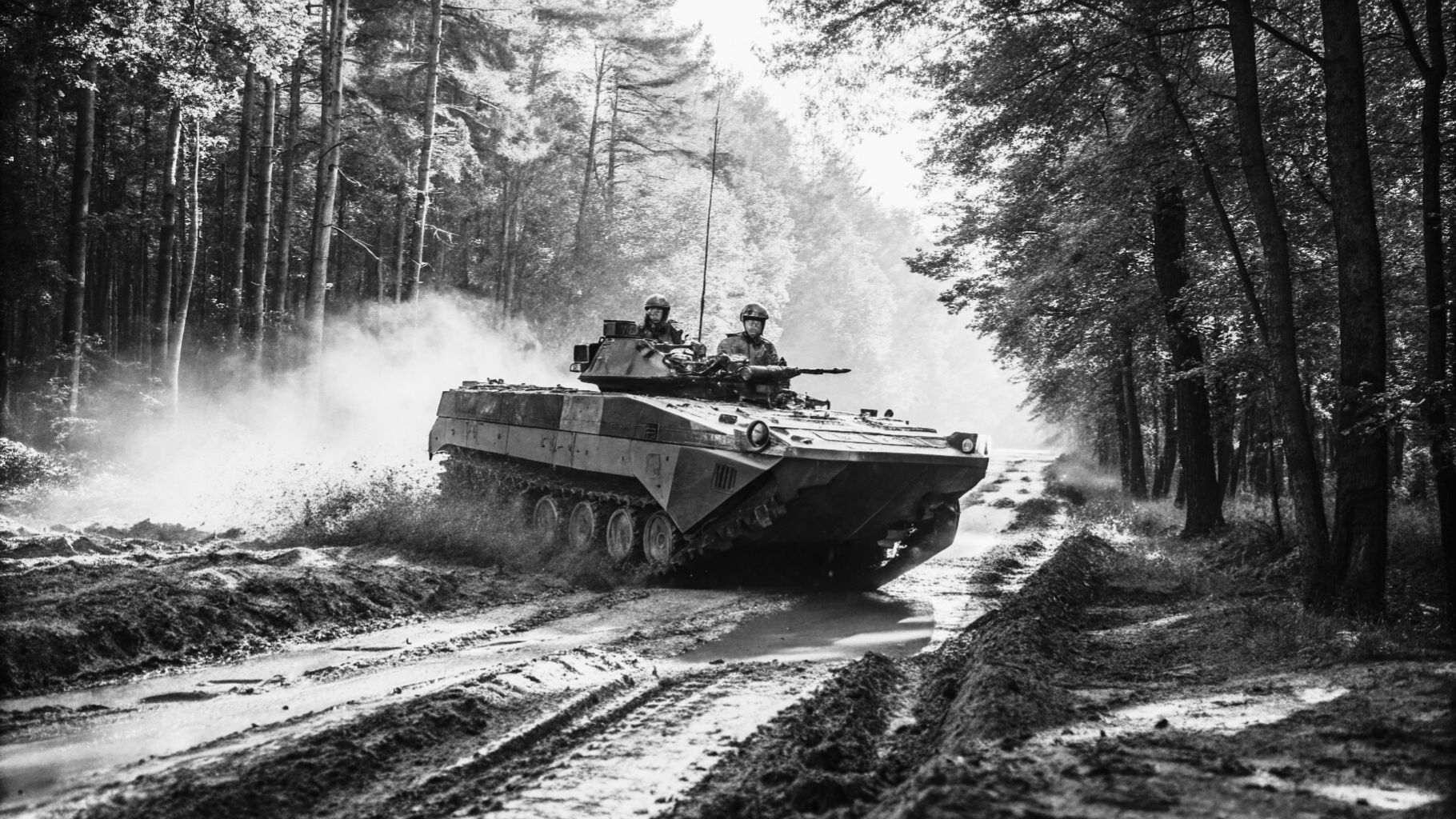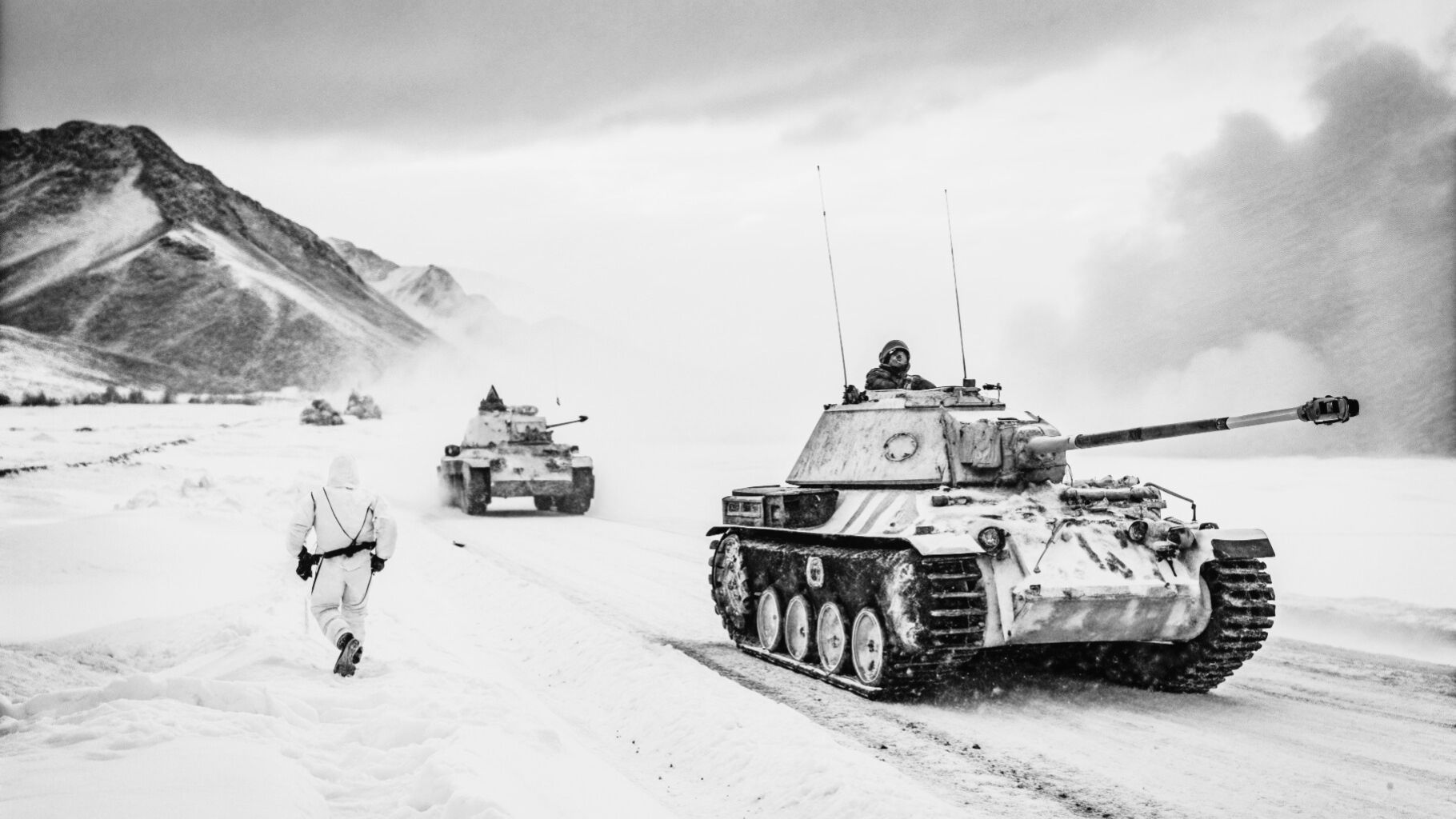
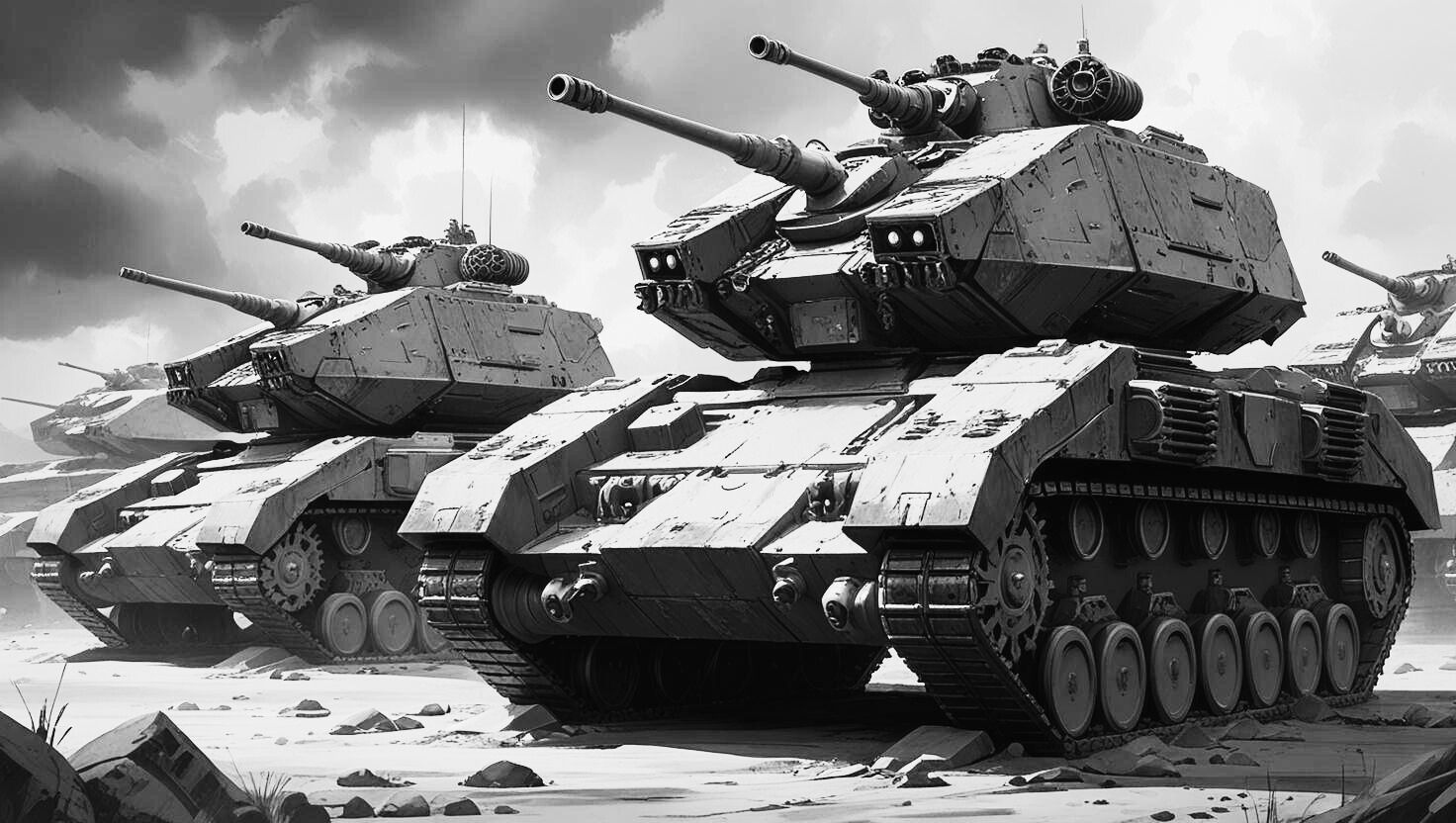
More than three decades after the Soviet Union dissolved, one of its most enduring armored designs continues to operate on battlefields around the world. Instead of creating a completely new main battle tank, Russian engineers refined the established T-72 design into the T-90, producing a platform that has remained in service and production for decades while gaining improved protection, fire-control technology, and mobility.
Today, the T-90 forms a major part of Russia’s armored forces and ranks among the country’s most widely exported main battle tanks.
What Is the T-90?
The T-90 is a third-generation Russian main battle tank developed by state-owned Uralvagonzavod under chief designer Vladimir Potkin.
Entering service in the early 1990s, the tank was intended to provide Russia with a standardized modern armored platform capable of replacing aging Soviet-era tanks without the expense and complexity associated with designing an entirely new vehicle.
Instead of adopting a completely revolutionary configuration, Russian engineers concentrated on improving survivability, target engagement, reliability, and battlefield effectiveness while retaining the mobility and logistical benefits of Soviet tank designs.
This development philosophy produced a vehicle capable of leading armored formations, supporting mechanized units, and engaging a variety of battlefield targets. Continuous modernization has allowed the T-90 to evolve from a post-Cold War replacement into a key component of Russia’s armored fleet and a major defense export.
The T-90 Family
Over more than three decades, the T-90 platform has developed into a broader family of main battle tanks and specialized support vehicles. Although the different versions retain the same basic design lineage, newer variants have introduced advances in protection, firepower, electronics, mobility, and mission-specific equipment.
Main Variants
T-90 (Object 188): The original production version entered Russian service in 1992. It featured a 125mm smoothbore cannon, Kontakt-5 explosive reactive armor, and the Shtora-1 electro-optical countermeasure system intended to enhance protection against certain anti-tank guided missiles.
T-90K: This command variant of the standard T-90 incorporates additional communications, navigation, and command-and-control equipment, enabling commanders to coordinate armored formations while maintaining the tank’s combat capabilities.
T-90S: Developed primarily for export, the T-90S has been supplied to countries including India, Algeria, Azerbaijan, Iraq, Turkmenistan, Uganda, and Vietnam. Its configuration could be adapted to individual customer requirements, helping establish the platform as one of Russia’s most successful armored exports.
T-90SK: The command version of the T-90S, equipped with enhanced communication and navigation systems for command and control duties.
T-90A: Introduced during the early 2000s, the T-90A featured a welded turret instead of the earlier cast design, along with a 1,000-horsepower engine, thermal imaging systems, and improved fire-control equipment. These upgrades significantly enhanced its battlefield performance.
T-90SA: An export derivative of the T-90A incorporating many of its technological improvements while being configured for overseas customers.
T-90MS: Unveiled in 2011, this heavily modernized export variant features a redesigned turret, enhanced fire-control equipment, digital battlefield management, improved armor, better crew ergonomics, and a more powerful engine.
T-90M “Proryv” (Object 188M): The most advanced operational T-90 variant, the T-90M incorporates Relikt explosive reactive armor, an upgraded 125mm 2A46M-5 gun, digital fire-control systems, panoramic commander sights, improved communications, and enhanced crew protection. It represents the primary modernization standard for Russia’s active T-90 fleet.
Specialized Support Vehicles
The T-90 chassis has also been adapted for several support vehicles designed to accompany armored units.
BREM-1M: An armored recovery vehicle used to recover damaged or disabled tanks and conduct battlefield repairs. Its equipment includes a heavy-duty crane, recovery winch, bulldozer blade, and repair tools.
IMR-2MA: A combat engineering vehicle designed to clear obstacles, remove debris, prepare routes, and support armored mobility. It features a hydraulic crane, dozer blade, and other engineering equipment.
MTU-90: An armored bridge-layer designed to rapidly deploy bridges across rivers, trenches, and other obstacles, enabling armored vehicles to maintain operational momentum.
How Does the T-90 Work?
The T-90 combines heavy firepower, layered protection, and a compact design to provide mobility and battlefield effectiveness.
Key Features
125mm Gun With Guided Missile Capability
The tank is equipped with a 125mm smoothbore cannon supported by an automatic loading system. This allows the T-90 to operate with a three-person crew, compared with the four-person crews common in many Western tanks.
In addition to conventional armor-piercing and high-explosive ammunition, the cannon can launch 9M119 Refleks (AT-11 Sniper) laser-guided anti-tank missiles. This provides the tank with an additional capability against armored targets and low-flying helicopters at distances beyond the effective range of conventional tank ammunition.
Layered Survivability
Protection on the T-90 relies on multiple defensive layers rather than armor alone. Depending on the variant, the tank can employ composite armor, Kontakt-5 or Relikt explosive reactive armor, smoke grenade launchers, laser warning receivers, and Shtora-1 electro-optical countermeasures on earlier models.
The T-90M introduces further protection improvements, including a redesigned turret, additional side armor, spall liners, and enhanced ammunition storage arrangements intended to improve crew survivability.
Compact Design for High Mobility
The T-90 retains the compact configuration characteristic of Soviet-designed tanks and has a relatively low combat weight. Its automatic loader eliminates the requirement for a dedicated human loader, reducing the crew to three and contributing to a smaller turret profile.
Engine power has increased from approximately 840 horsepower in the original T-90 to around 1,130 horsepower in the T-90M. This provides strong cross-country mobility while maintaining comparatively manageable transportation, recovery, and maintenance requirements.
Strengths
Cost-effective modernization: The T-90’s evolution from an established platform has enabled Russia to introduce new technologies through successive upgrades without the cost of developing an entirely new tank.
Compact and logistically efficient: Its relatively compact dimensions and lower weight can simplify transportation, recovery, and maintenance compared with heavier main battle tanks.
Proven export platform: The T-90 has become one of Russia’s leading armored exports, serving operators across Asia, Africa, and the Middle East. Licensed production, particularly in India, has also demonstrated the platform’s ability to accommodate different operational requirements.
Upgrade potential: Successive versions have introduced improved armor, thermal imaging, digital fire control, communications, and battlefield networking while retaining the fundamental platform architecture.
Limitations
Aging design foundation: Despite extensive modernization, the T-90 remains rooted in the T-72 architecture, which places limits on the extent of future upgrades.
Crew survivability concerns: Much of the tank’s ammunition is stored within the vehicle, including in the crew compartment, a configuration that has attracted scrutiny following combat losses despite improvements on newer versions.
Vulnerability to modern threats: Recent conflicts have highlighted the vulnerability of even advanced main battle tanks to top-attack weapons, drones, loitering munitions, and precision artillery when they operate without adequate combined-arms support.
Global Use
The T-90 has become one of the most widely operated modern Russian main battle tanks, with users across Asia, the Middle East, Africa, and Eastern Europe.
Major operators include Russia, India, Algeria, Azerbaijan, Iraq, Turkmenistan, Vietnam, Uganda, Armenia, and Syria. Other countries have also evaluated or acquired smaller numbers of the platform.
India is the largest foreign operator, with more than 1,000 T-90S Bhishma tanks, many of which have been assembled domestically under license. The tank’s combination of firepower, layered protection, and comparatively lower acquisition costs has made it attractive to countries seeking a capable main battle tank at a lower cost than many Western alternatives.
The T-90 has also accumulated combat experience in several conflicts.
Second Chechen War (1999–2009): T-90 tanks were deployed during Russian ground operations in urban and mountainous environments.
Syrian Civil War (2015): Russian and Syrian forces operated T-90s during offensive operations, drawing attention to the tank’s performance against anti-tank guided weapons.
Nagorno-Karabakh: Azerbaijan operated T-90S tanks during periods of tension with Armenia, including the 2020 conflict.
Russian Invasion of Ukraine
The war in Ukraine has generated the most extensive publicly documented combat record of the T-90. The conflict has also highlighted significant vulnerabilities.
According to open-source intelligence tracking by Oryx, which records visually confirmed losses, T-90M losses had reached the dozens by early 2026. These losses have been associated with drone attacks, anti-tank missiles such as Javelin and NLAW, and battlefield engagements involving Western-supplied armored vehicles.
One of the major vulnerabilities identified in Ukraine is inherited from the T-72 design. Unlike Western tanks such as the M1 Abrams, which separate ammunition from the crew compartment, the T-90 stores much of its main-gun ammunition in an internal carousel.
If the ammunition is penetrated and detonates, the resulting explosion can cause catastrophic damage, including the separation of the turret from the hull. This phenomenon has been documented repeatedly during the conflict and has contributed to concerns over crew survivability.
Russian forces have also fitted some tanks with improvised “cope cages,” consisting of metal structures installed over the turret to provide additional protection against top-attack weapons and drones. However, these adaptations have provided only limited protection against modern Ukrainian anti-armor systems.
Future Outlook
The T-90 is likely to remain an important element of Russia’s armored forces for the foreseeable future, particularly while production and deployment of the newer T-14 Armata remain limited.
Russia continues to modernize existing T-90 tanks to the T-90M standard, following the same evolutionary approach that transformed the T-72 into the T-90.
Modernization is also continuing among international operators. India, the largest foreign user, is pursuing domestic upgrades for its T-90S Bhishma fleet, including advanced thermal imaging and night-vision capabilities designed to improve target acquisition and all-weather operations while extending service life.
Captured T-90s and other Russian armored vehicles in Ukraine have also been refurbished with Western communications systems, electronic warfare equipment, and anti-drone protection before being returned to battlefield service.
As armored warfare continues to change, future T-90 modernization is expected to place greater emphasis on counter-drone capabilities, electronic protection, and active protection systems.