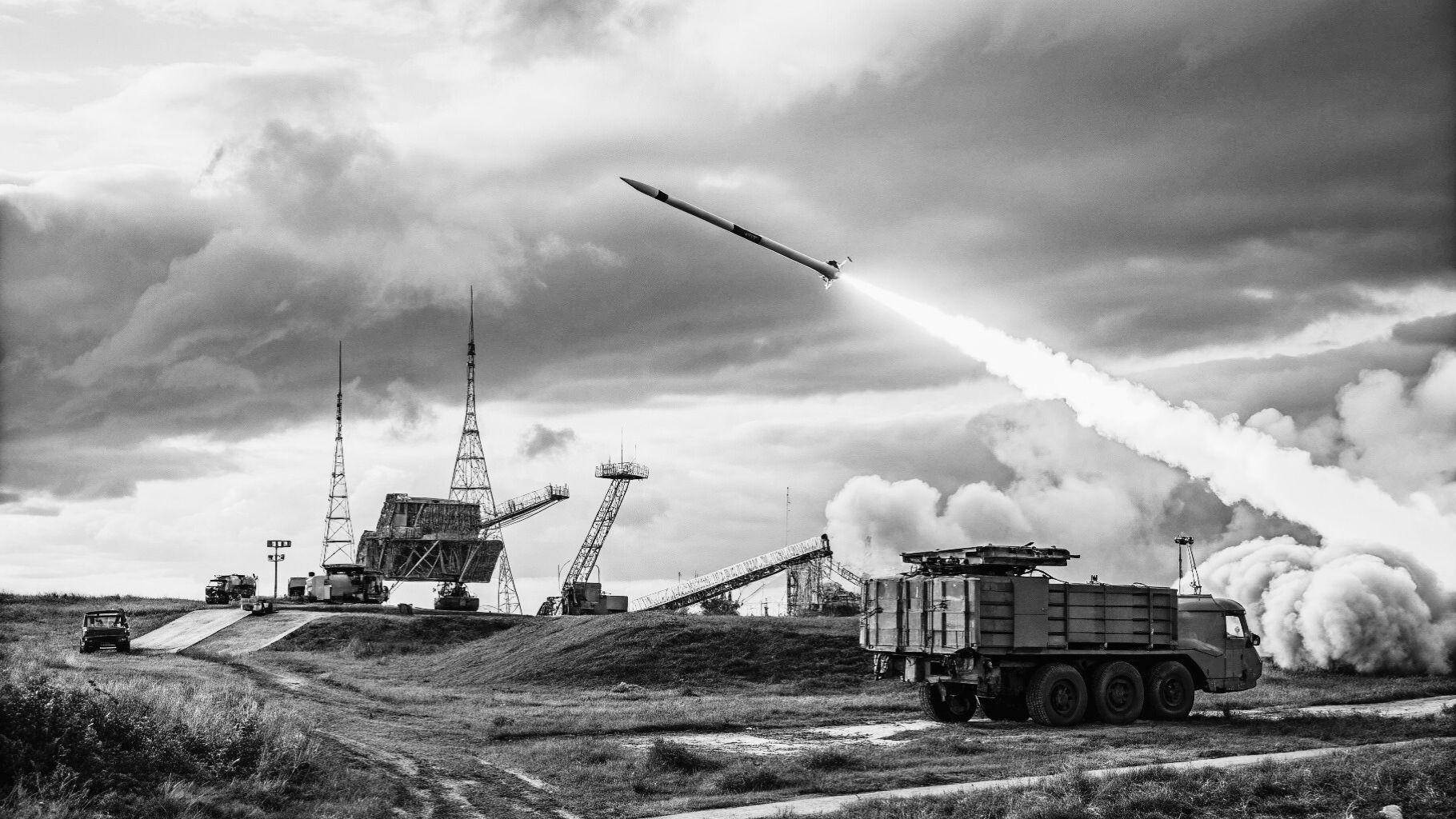
India’s Agni family of long-range ballistic missiles is designed with sufficient performance margin to absorb significant propellant losses during certain test-flight manoeuvres, according to former DRDO Chairman S. Christopher. He revealed that trajectory adjustments used to avoid foreign airspace can consume up to around 30 percent of a missile’s fuel allocation, while the system can still complete its planned range and accurately reach its designated target.
The Challenge of Long-Range Agni Tests
Conducting full-range missile tests over the Bay of Bengal requires extensive trajectory planning because the available test corridor is surrounded by the airspace and territorial boundaries of several countries. A direct flight path is not always practical if it could cross another nation’s sovereign airspace or come too close to international aviation and shipping routes.
To overcome these limitations, mission planners can employ modified trajectories that require the missile to make significant changes to its flight path. These dog-leg manoeuvres allow the test vehicle to remain within the approved test corridor while avoiding areas outside the designated safety envelope.
Manoeuvring capability has been an important feature of the Agni programme since its early development. DRDO initially incorporated such technologies to improve re-entry accuracy and demonstrate advanced guidance and control capabilities. The same technology has subsequently provided additional flexibility for conducting long-range trials in a geographically and diplomatically sensitive environment.
Designing Around the Propellant Penalty
Trajectory corrections inevitably consume additional energy. When a missile changes direction during flight, its control systems must expend energy to overcome existing momentum and establish the new trajectory. The additional propellant consumption can therefore reduce the energy available for extending the missile’s downrange flight.
Christopher’s comments indicate that Agni systems are engineered with sufficient propulsion and trajectory margins to compensate for this penalty. Even after performing substantial flight-path corrections, the missiles can reportedly achieve their planned test ranges.
This highlights an important aspect of strategic missile engineering: a declared range does not necessarily represent the absolute physical limit of a missile. Designers can incorporate additional performance reserves to accommodate real-world testing constraints, including restricted flight corridors and safety requirements.
Strategic Significance for India
The disclosure provides a rare perspective on the engineering and operational considerations behind India’s long-range missile testing programme. It demonstrates how DRDO, the Strategic Forces Command, and test-range planners must balance missile performance with geographical restrictions and regional sensitivities.
The distinction between demonstrated range and theoretical maximum capability is particularly relevant to strategic deterrence systems. During testing, missiles may follow more complex trajectories than would be required under different operational circumstances. Consequently, the performance demonstrated during a constrained test does not necessarily represent the system’s theoretical maximum capability.
As India advances the Agni-V programme and works toward future long-range strategic missile capabilities, maintaining adequate performance margins will remain critical for validating systems under restrictive test conditions while preserving the credibility of the country’s strategic deterrent.