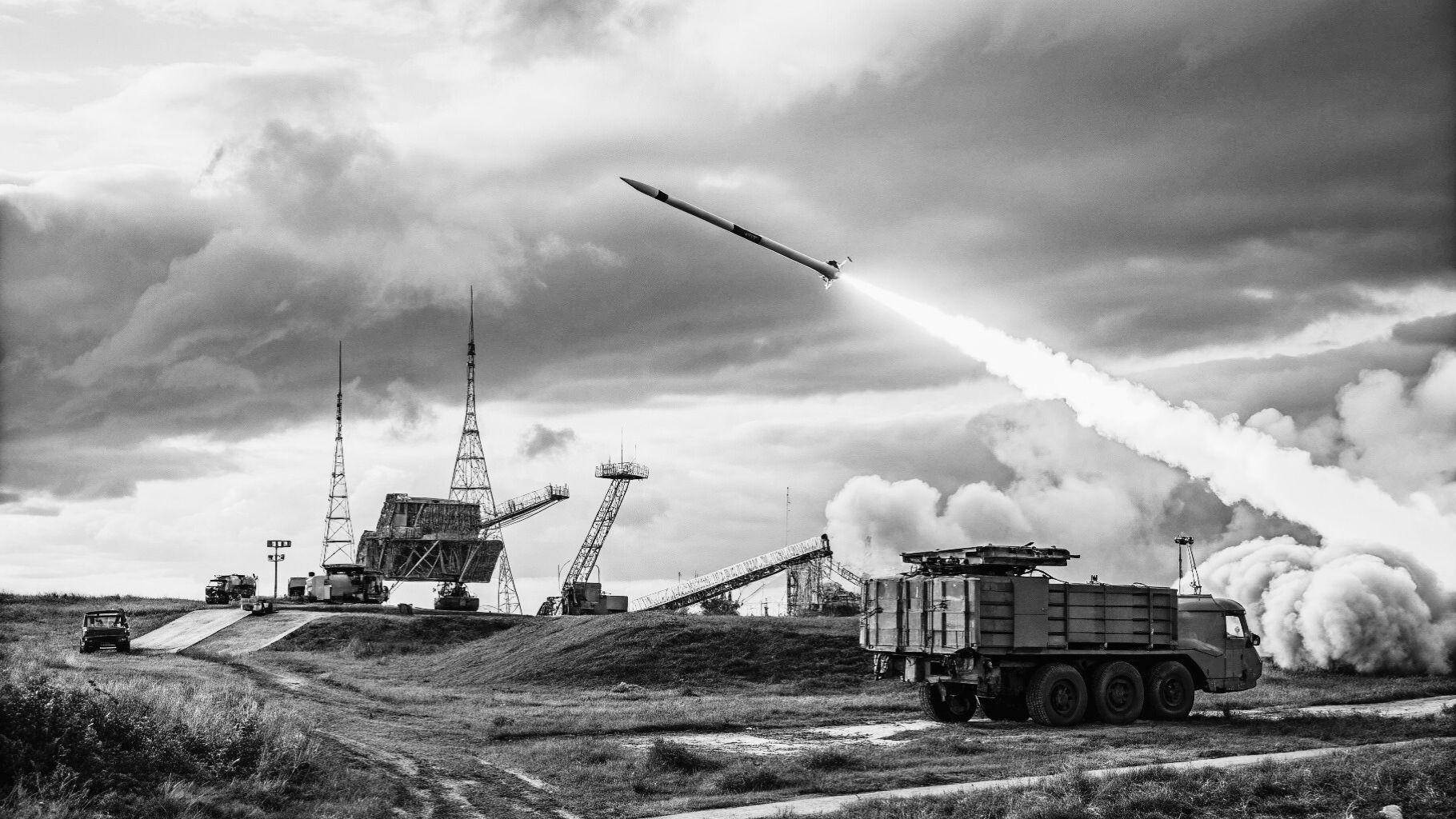
India has made substantial progress in developing a diverse long-range missile inventory, with weapons such as BrahMos and the forthcoming Long-Range Land Attack Cruise Missile (LR-LACM) strengthening the country’s precision-strike capabilities. Yet the changing nature of modern warfare points to the need for another category of weapon: a relatively inexpensive, mass-producible subsonic cruise missile with a range of roughly 500 km.
This capability would fill the space between shorter-range tactical weapons and sophisticated strategic cruise missiles. Rather than competing with BrahMos or LR-LACM, a lower-cost cruise missile could complement them by providing commanders with a weapon optimised for volume, affordability and operational availability.
Cost is a critical factor in prolonged missile warfare. BrahMos delivers exceptional speed, precision and survivability, but these characteristics require sophisticated propulsion, guidance and seeker technologies. Likewise, LR-LACM is intended to provide a deeper strategic strike capability and would be better suited to high-value targets requiring extended reach.
Using such premium weapons against every target during a sustained conflict could rapidly reduce missile inventories. Many operational targets, including logistics nodes, ammunition storage areas, radar sites, fuel facilities, bridges and secondary command posts, may not justify the use of the most expensive weapons available.
A 500-km-class subsonic cruise missile could address these targets at a lower unit cost. Its principal advantage would be the ability to generate sustained precision fires without consuming premium missile stocks at the same rate.
Mass production would be equally important. Sophisticated missile systems often depend on specialised components, advanced propulsion technologies and complex manufacturing processes. These factors can make rapid wartime production challenging, particularly when supply chains are under pressure.
A purpose-built mass-production missile could use modular architecture and simplified manufacturing processes to improve production scalability. India’s expanding private defence sector could play a greater role in manufacturing propulsion systems, electronics, composite structures and other subsystems. The emergence of indigenous compact turbofan technologies could further support efforts to establish a reliable domestic propulsion ecosystem.
The ability to launch larger numbers of relatively inexpensive missiles could also contribute to a layered approach against enemy air-defence networks. Integrated air-defence systems are designed to detect, track and intercept incoming threats, but their interceptor stocks are finite and individual engagements can be expensive.
Large-volume attacks could place additional pressure on defensive networks by forcing them to respond to multiple simultaneous threats. Even where air-defence systems successfully intercept many incoming missiles, the expenditure of interceptors can gradually reduce defensive reserves. Subsequent strikes using more capable systems could then take advantage of vulnerabilities created within the defensive network.
This approach would allow different missile classes to perform complementary roles. A mass-produced subsonic missile could provide volume, while BrahMos and LR-LACM could be retained for missions where speed, range, survivability or strategic effects are especially important.
The proposed capability could also increase operational flexibility for theatre commanders. Because premium strategic missiles are limited in number and carry greater strategic significance, their employment may require higher-level authorisation. A more widely available 500-km cruise missile could provide commanders with an additional precision-strike option for operational targets across the theatre.
Such a weapon could potentially support missions against enemy airfields, logistics infrastructure, fuel storage sites, command facilities and other operational targets. Greater availability would allow commanders to respond more quickly to changing battlefield conditions without drawing extensively on strategic missile inventories.
The concept would also support India’s broader defence-industrial transformation. Increased involvement from private companies in missile propulsion, guidance, electronics, composites and autonomous systems could create multiple manufacturing channels. This would reduce dependence on a limited number of production facilities and improve the resilience of the defence supply chain during periods of crisis.
The resulting missile portfolio could follow a layered model. BrahMos would remain suited to high-priority targets requiring high speed and strong terminal effects. LR-LACM would provide a longer-range strategic strike option against critical targets deep within an adversary’s territory. A 500-km subsonic cruise missile would provide the affordable, high-volume layer for tactical and operational precision strikes.
The central argument is not that India needs another missile simply to expand its arsenal. Instead, the requirement is for greater balance between performance, cost and production scale. Modern warfare has shown that the ability to sustain precision strikes over time can be just as important as the performance of individual weapons.
A mass-producible subsonic cruise missile could therefore add depth to India’s strike architecture, enabling the armed forces to conserve sophisticated strategic weapons while maintaining a larger pool of affordable precision-strike assets for prolonged, high-intensity operations.